Showing posts with label food prices. Show all posts

26 June 2009

Avoid Dublin - and save Money!

Ireland as a whole has always been an expensive country to live in, and it still is. Prices here are on average at least twice as high as in most other EU countries, and often even higher. There is also a clear difference between Dublin and the rest of the island.

Ireland's Central Statistics Office (CSO) has just published its regular comparison of prices in Dublin with the costs for certain goods and services outside the capital. The report shows that many prices are "generally higher" in Dublin, while the prices of most services are listed as "significantly higher" in Dublin.

In May the CSO looked at 79 specific items. Average prices were higher in Dublin for 51 of these and lower for 27, while the price of only one item was the same in the capital than anywhere else. Prices of 34 items were more than 3% higher in Dublin than elsewhere.

On average, prices were 4.4% higher in Dublin than in the rest of Ireland, little changed from the 4.5% gap in the last survey, which was done in November 2008.

The biggest price gap was found in the barber and hairdressing business. A wash, cut and blow dry for a man is on average 47% more expensive in Dublin than elsewhere in the country, while the same service for a woman costs 23% more. A dry haircut for a man is 18.8% dearer in the capital.
These are staggering differences and show how much our capital is still dominated by greed. As I had only one haircut in Dublin in all my life - and that was almost 20 years ago - my experience in that field is well out date. But from my regular visits to the capital I can only confirm that the prices for almost everything are much higher than they are - for example - in Cork, Kilkenny or here in Waterford.

Prices of meat, fruit and vegetables are higher in Dublin, but fish prices are generally comparable with the rest of the country.
The average price of an uncooked chicken is an amazing 27.3% higher in Dublin, while back rashers are 24% and pork steaks 23.8% more expensive.
There follows a long list of food items that are dearer in Dublin, from which I will mention only a few: Cod fillets (+ 11.2%), eggs (+ 10.1%), tinned tomatoes (+ 8.2%), lamb chops (+ 8.1%), pork chops (+ 6.9%), mushrooms (+ 6.4%), onions (+ 6.4%), jam (+ 6.3%), 10 kg of potatoes (+ 6.0%), marmalade (+ 5.8%), broccoli (+ 5.6%), salmon (+ 4.8%), fresh tomatoes (+ 2.8%) - and so it goes on.

The situation in the drink sector is not better: Orange juice (+ 14.9%), draught lager (+ 12%), draught cider (+ 10.9%), draught ale (+ 10.1%), bottled lager (+ 9.9%), draught stout (+ 9.1%), bottled cider (+ 8.5%), vodka (+ 7.1%), whiskey (+ 5.7%) and wine (+ 5.1%).

Bread prices, however, were around 8% more expensive outside Dublin, which is most likely a result of the structure of our food industry. While in most European countries bread is usually baked locally in many independent bakeries, Ireland has very few independent local bakeries. Most of the bread consumed in this country is produced industrially in large factories, and most of them are situated in Dublin. Thus the supply route for bread is the shortest in Dublin, and the extra 8% bread costs outside the capital are likely created by the expenses caused by transport and distribution.

Prices of hotel accommodation and entertainment services such as cinema and theatres are 'significantly higher' in Dublin than elsewhere.

Petrol prices were 2.1% higher in Dublin, while Diesel was 1.7% more expensive.

The overall verdict is that - despite recession - Dublin is not just the capital of Ireland, but still the rip-off capital of Europe. So my advice is simple: Avoid Dublin as much as possible - and thus safe a lot of money.

The Emerald Islander

23 June 2009

Ireland's Food & Drink Industry in Decline

About 2000 jobs have been lost in Ireland's food and drink industry since the start of this year and thousands more are currently at risk.

According to a new report, the competitive position of some firms has been "damaged by high business costs and a fall in the value of [the British] Pound Sterling against the Euro".

A key problem for the industry are massive energy costs, which are 20% higher in Ireland than the average paid anywhere across the EU. Industrial electricity prices here have increased 70% since 2001, and 36% across the EU.

More than 40% of Irish food exports go to Britain, but as the Pound Sterling has fallen in value by 30%, this reduces both turnover and profit of Ireland's food products sold to our nearest neighbour.

The report argues for new and special financial supports for Irish companies selling into the UK.

It claims that food and drink production and processing is Ireland's most important indigenous sector with 230,000 incomes directly depending on its future health and stability.

The report also points out that the top three grocery chains control more than 70% of the Irish market. Thus the bargaining power of retailers - especially the big ones - is much higher than that of suppliers.

It calls for the appointment of a 'Supermarket Ombudsman' and a code of practice to protect Irish food suppliers from what it terms as "unfair commercial practices".

Reacting to the report, Tánaiste and Minister for Enterprise, Trade & Employment Mary Coughlan (photo) said she had asked the national Competition Authority to investigate the real costs of doing business in Ireland.

That really says it all, plain and simple. She hasn't got a clue!

If she had any idea of her own department and the matter it deals with, she would well know what is going on in Ireland's shops and supermarkets.

I am no genius or minister, but I do not need to ask some faceless and unelected quango. Every time I go shopping I know within a few minutes who is making the money in Ireland and what is going on in the food industry.
Anyone can do the same, including Fianna Fáil ministers. But the problem with Mary Coughlan is that she has neither any personal interest in the matter, nor much intellectual capacity to deal with anything of importance.

Erin go broke, Paul Krugman would say (see guest column of April 23rd). But 'the Cow' Mary Coughlan never gives a damn, as long as she gets paid her high ministerial salary and is driven around the country like a fairy queen.

The rest of us are only here to pick up the bill and suffer...

The Emerald Islander

23 May 2009

Shopping as it should be

Being a single man, living with a cat as my only companion, I do all the cooking and household chores that many other men have done for them by a woman. But I am not complaining. In fact, I like cooking and see it as one of the creative arts.

I also like to go shopping for groceries, which has of course to come before I can start cooking. And unlike many women I see in the supermarkets each week, filling their trolleys thoughtless and senseless with piles of expensive and unhealthy items of processed food, I am a discerning and selective shopper. I am also very price-conscious, a trait I have inherited from my mother.

So when I go shopping, I always look out for bargains or special offers, and in general I seek good value for my money. This does not mean that I always buy the cheapest items. Good value for money means getting quality for a fair price. As Ireland is quite an expensive country, with most things costing about twice as much as they cost in most other EU countries, it is worth to shop around.

Over the years I have developed personal shopping habits, buying a range of particular items in various shops, depending on quality and price. For my normal weekly grocery shopping I usually frequent three different local supermarkets (two Irish-owned and one foreign) and one small Polish shop that has opened here a few months ago and stocks certain continental delicacies one would not find in Irish shops or supermarkets.

One of the Irish supermarkets I use regularly is SuperValu, a chain of franchised stores under the umbrella of the Cork-based Musgrave Group. It is located in a small shopping centre, only a short walk from my house, and offers a wide range of quality food at fair prices.
The same also applies to the other two supermarkets I frequent, so I always decide carefully what I buy in one or in the others.

What makes SuperValu stand out from their competitors in recent weeks and months is their pro-active response to our current recession.

For the past nine months the Irish economy has not only seen a massive downturn in the wake of the global financial crisis, it has actually crashed and created widespread economic stagnation and the highest rate of unemployment this country has seen for decades.
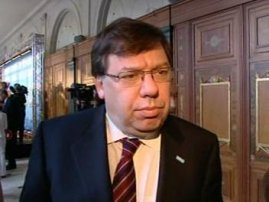
Our current government, which is chiefly responsible for the terrible mess we are in, has no idea how to lead us out of it again. Facing a huge budget deficit - due to a drastic fall in tax revenue - Finance Minister Brian Lenihan just raises taxes all over the place and imposes extra levies on all those who still have a job. This gives him some extra money on the short-term, but it means of course that most people in Ireland have now less money in their pockets.
Subsequently everyone is tightening the proverbial belt and tries to spend less. And this has of course a direct and significant impact on all Irish shops and businesses.

People still need to eat, to wash their clothes and to clean their houses, but supermarkets and shops feel already the pinch of the nation's reduced spending power.
Some grocery shops just carry on as usual, hoping that people might still buy their products at the normal prices and make their personal spending cuts elsewhere. But the major supermarket chains are beginning to wake up and present their customers with ever more bargains and special offers.

This is a very welcome development and can only be further encouraged.

And though all supermarkets are making efforts now to retain their regular customers and gain new ones as well, the one that stands out from the rest and truly deserves a special mention is SuperValu.

Like most supermarkets, they always have - and had for years - special offers and promotions, usually on a weekly basis. But now SuperValu is going even a step further and offers special deals I have not seen anywhere else.
They actually give away certain food items for free, usually in very lucrative combination offers that are particularly suitable for families.

In recent weeks they offered nice cuts of Irish round roast (beef) at half of the normal price, and for every piece of meat one bought, one got either a small bag of potatoes, a bag of carrots, or a net of onions thrown in free of charge.

This is - in my humble opinion - the right attitude towards loyal customers and a proper and sensible reaction to the current recession and the general shortage of money in people's pockets. Or, to say it with SuperValu's own motto: Shopping as it should be.

When I went there yesterday and saw the week's specials, my heart actually leapt in joy. There were large bags of Irish apples and punnets with clementines, strawberries and blueberries on offer, and all of them for just € 1 each! There were also some other items available for the great price of € 1, including a pound of butter, a large bag of potato crisps (which I don't eat, although they are very popular in Ireland) and a litre block of vanilla ice cream.

I bought plenty of the fruit and went home with a heavy bag, but had actually spent less money than I would normally spend on a Friday. And I think that such commendable action by an Irish retailer deserves to be mentioned to the readers of this weblog.

I also obtained a brochure with special offers for next week, and they are again very attractive, but too many to mention them all here. However, let me tell you that they include sirloin steaks at half of the normal price, with a bag of chips thrown in free of charge for every purchase. So, if you want to treat yourself to a traditional Irish dinner of steak & chips, next week (May 25th - 30th) is the time to go shopping at SuperValu.

The Emerald Islander


P.S. To avoid any misunderstandings, I should mention here that I received no payment or compensation in kind for the article above. I wrote the piece because I think that in hard times, when money is tight and everyone is trying to make ends meet, one should know who cares for the needs of the nation. And when I see good deeds done, I like to share them with my readers, in the same way as I will always expose those who are trying to exploit or overcharge us.

11 December 2008

CSO reports the lowest Inflation Rate in Years, but there is little Evidence in the Shops yet

The annual rate of inflation in Ireland has eased sharply in November, falling to 2.5% from 4% in October. This is the largest reduction since monthly records began.

According to the Central Statistics Office (CSO) in Dublin, the overall cost of living fell by almost 1% during November alone.
Lower mortgage repayments, as well as petrol and diesel price cuts were the main reasons for the reduction. However, there are no signs of food prices coming down. They are still as high as they were last month, and in some cases one can even see further rises, even though not as much as they rose throughout the first half of the year. (see also my entry of February 28th)

2.5% is the lowest inflation rate Ireland had for three years, and many economic indicators suggest that further reductions are likely in the months ahead.

The key factors behind the reduction are global, including a sharp interest rate reduction by the European Central Bank (ECB) in October, as well as rapid cuts in international oil prices due to mounting evidence that the global economy has entered recession.

Today's figures show average mortgage repayments fell by 8.4% in November, as banks began to pass on to borrowers the first of three interest rate reductions. Rents also fell by 6.1% during the month.

There was also a sharp reduction in the cost of home heating oil, which was down by more than 10% in November.
Since I heat my little house with peat and wood, that does not help me. The price for fire wood rose by 20% this year, and peat went up 12.5%. (This came on top of similar rises in 2007.)

Petrol prices were down 7.3% and diesel by almost 10%, as international oil price speculation rapidly unwound. Nevertheless people in Ireland still pay a lot more at petrol stations than anyone else in Europe. Only a few days ago Fine Gael's deputy leader and Finance spokesman Richard Bruton stated that petrol is 24% more expensive in Ireland, while diesel costs 18% more than in the other 26 EU countries. (see my entry of December 3rd)

With further interest rate and oil price cuts still to be passed on to consumers, all the signs suggest that inflation will ease further in the months ahead. There is also likely to be significant downward pressure on inflation coming from the strength of the Euro, which hit another record high of 88.8 pence against the British Pound Sterling today. This would be the equivalent of the old Irish Punt being worth almost £ 1.13, its highest value ever.

At least the currency value proves that adopting the Euro was a good and sensible decision, even though there were plenty of critics and grumblers during the first few years. But that has eased now.

Overall, today's figures are a little bit of good news from the CSO, which has delivered only bad news to us for most of the year.
However, for people like me, who don't have a mortgage and don't drive a car, the fall in inflation is only another number. I watch very closely the prices in the shops, and there have been no reductions at all. The whole of 2008 has seen an ever further rice in prices for even the most basic food and consumer goods. It will be interesting to see if the apparent fall of the inflation rate will reach the shops before Christmas. I somehow doubt it, with the exception that probably pork and products made with pork will be offered at reduced prices as soon as they are back on the shelves.

But that will have nothing to do with inflation. It will be an attempt to make good for the losses shops as well as producers made due to the recent contamination scandal and the subsequent food scare.
Being a vegetarian, this will not do me any good either. So, as much as I welcome the CSO's news of falling inflation, I have not seen or experienced any of its benefits yet.

The Emerald Islander

17 September 2008

No more Cappoquin Chickens

Another serious blow has been dealt to the local economy in Co. Waterford.
The owners and management of
Cappoquin Chickens, a well-known poultry producer in the rural western part of the county, has confirmed that the company, which employed up to 250 people at certain times of the year, will close with the loss of all full-time and seasonal jobs.

The winding down process has already begun and will take about six weeks to complete. Talks to save the company, including with a potential buyer from England, broke down on Monday and management say they have been "left with no option but to close".

For nearly 50 years Cappoquin Chickens has been a household name in Ireland, especially in the south and south-west of the country. Privately owned and operated by several generations of the O'Connor family from the town of Cappoquin in the west of Co. Waterford (best known as the home of the Cistercian Abbey of Mount Mellery), the company saw a steady growth since the 1960s. But more recently Cappoquin Chickens had been in financial difficulties for a number of years. The company revealed during the summer that it had accumulated debts of at least € 7 million.

I am no agricultural expert and know nothing about the production of poultry, but it seems a bit strange that the company's difficulties coincide with the 'Celtic Tiger', the massive and widely unexpected economical boom that brought nearly half a million immigrants to Ireland. One would think that such an enormous increase in the population of the country would also create more demand for food, including chicken, which are by now (after the scares of the BSE crisis) probably the most popular form of meat consumed in Ireland.

So why has Cappoquin Chickens to close, despite an enlarged market? I don't know, and I would not feel competent to speculate, as I know neither the internal situation of the company, nor the quality and competence of its managers.

Local people blame the global food crisis, which has dramatically increased the price of grain. But that is not entirely logical, as the price for all kinds of food - including chicken - has risen here in the past two years overproportionally. So when the price of grain, that is fed to the chicken, goes up, the price of the chicken rises as well. And there is no shortage of chicken in Irish shops. The canandrum remains why other producers can cope with the situation, while the O'Connor family in Cappoquin can not...

The Waterford branch of the Irish Farmers' Association (IFA) held a demonstration (see photo left) some time ago, in order to highlight the expected job losses in the area and in the faint hope that someone - perhaps a local politician - might actually do something before it was too late. Today the organisation is in shock, and in a statement it calls the closure of Cappoquin Chickens "another devastating blow for the Irish poultry industry".

Between 40 and 50 local egg suppliers and chicken producers, who were suppliers of Cappoquin Chickens and dependent on the company, are also deeply affected by the closure. One local producer, who has seven chicken houses with 180,000 birds, describes his future as "very bleak" without Cappoquin Chickens. "Well, chickens is all I know," he told a reporter.

Again, I feel reluctant to comment in detail, as I have no experience in the poultry business. But on a more general note I have to say that such a view is rather narrow. Millions of people around the world - and thousands in Ireland - have lost their jobs in many different industries. Quite a lot of them have no chance to stay in their line of business, trade and expertise. So they have to find something else to do, some other way to earn a living. And there are always possibilities, as new doors open the moment another door closes. All it needs is common sense, flexibility and the will and ability to learn and adapt.

Some help from the government would certainly be welcome, though I doubt that it will be a lot in the current economic recession, especially as the Minister for Finance is trying to save as much money as possible everywhere.

Perhaps it might have been wiser to invest some money in the area while the going was good and there was plenty of cash in the Treasury. But that chance has been missed, as so many others.
It is worth mentioning that the area had with Ollie Wilkinson (Fianna Fáil) a local TD (member of parliament) until the 2007 election, when he lost his seat. Being a Cappoquin man himself, and a member of the main government party, Ollie might have been able to pull a few strings in favour of his town and the local poultry industry, if he were still in Dáil Éireann. But since he was hardly ever heard of during the five years he was a TD, voters elected someone else in his place. And this TD is a city man with not much concern for chicken production.

As much as the loss of another 250 jobs in the South-East of Ireland is a concern for everyone, including myself, there is another aspect to the event. Being a vegetarian and active member of the ISPCA (Irish Society for the Prevention of Cruelty to Animals), I feel rather relieved that we will now have millions of battery chicken less in this country. The Irish diet is still too much centred on meat - including and increasingly chicken - and the consequences are manifold, but entirely negative. Perhaps the closure of the poultry industry in Cappoquin, as shocking as it may be for the local producers, could be another step forward on the way to better, healthier and more sensible food production in this country.

The Emerald Islander

14 April 2008

World Bank warns of severe Food Shortages

The World Bank has announced emergency measures to tackle rising food prices around the globe.
World Bank
president Robert Zoellick (right) warned that "100 million people in poor countries could be pushed deeper into poverty by spiraling prices". The crisis has already sparked recent food riots in several countries, including Haiti, the Philippines and Egypt.

The World Bank endorsed Mr. Zoellick's "new deal" action plan for a long-term boost to agricultural production. Emergency help would include an additional $ 10 million to Haiti, where several people were killed in food riots last week, and a doubling of agricultural loans to African farmers.

Robert Zoellick's proposals were endorsed by the World Bank's steering committee of finance and development ministers at a meeting in Washington.
The World Bank and its sister organisation, the International Monetary Fund (IMF), held a weekend of meetings addressing the rapidly rising food and energy prices as well as the credit crisis that is upsetting global financial markets.

IMF president Dominique Strauss-Kahn, a former French Finance Minister, said last week that hundreds of thousands of people were at risk of starvation because of food shortages. Prices have risen sharply in recent months, driven by increased demand, poor weather in some countries that has ruined crops, and reduced production area, due to an increase in the use of land to grow crops for transport fuels.

According to the World Bank the price of staple crops such as wheat, rice and corn have all risen, leading to an increase in overall food prices of 83% in the last three years.
The sharp rises have led to protests and unrest in many countries, including Egypt, Ivory Coast, Ethiopia, the Philippines and Indonesia. In Haiti last week's protests turned violent, leading to the deaths of five people and the fall of the government.

Restrictions on rice exports have been put in place in major producing countries such as India, China, Vietnam and Egypt. Rice importing countries such as Bangladesh, the Philippines and Afghanistan have been hit hard.

"We have to put our money where our mouth is now - literally - so that we can put food into hungry mouths," said Zoellick. "It's as stark as that."

He called for more aid to provide food to needy people in poor countries and help for small farmers. He said the World Bank was working to provide money for seeds for planting in the new season. He also urged wealthy donor countries to quickly fill the World Food Programme's estimated $ 500 million funding shortfall.

Mr. Zoellick, who was appointed to his post by George W. Bush after the previous World Bank president Paul Wolfowitz (who had earlier, as Deputy Defense Secretary, planned the illegal war against Iraq) had to resign in disgrace over a personal favours scandal forgot to mention only one point.
If the costs of only two days of US operations in Iraq would be re-directed to the World Food Programme, there would be no funding shortfall. In fact, the money the USA spend in Iraq in one month could end starvation and world poverty for good.
But in contrast to Robert Zoellick, his master G. W. Bush is not interested in people and how they live. All he cares for is money and oil.

The Emerald Islander

14 March 2008

Inflation rises to 4.8%

The newest data released by the Central Statistics Office (CSO) in Dublin show that the annual rate of inflation in the Republic of Ireland has risen to 4.8% in February, from 4.3% the previous month. Consumer prices in February rose by 1.2% in the month, compared with a rise of 0.8% the same time last year. Inflation last stood at 4.8% in October of last year.

According to the CSO the rise is mainly a result of the continuing increases in food prices, which I already observed and wrote about two weeks ago. (see my entry "Irish Food Prices are rising too fast" of February 28th)
Prices for food are rising indeed, on average by 1.8%, with significantly higher prices seen in a wide range of products, including milk, butter, cheese, meat, bread and cereals.

Many of the most significant increases are only possible because many consumers with secure incomes seem to be willing to pay any price for food. Would they draw a line for certain items and shop around a bit, they would not only save a lot of money, but also force greedy grocers and supermarkets to re-adjust their prices to the true market value. Prices as they are charged here in Ireland would lead to riots in France and many other EU countries.

The ending of the January sales might also have had some influence on the rise of the inflation rate. The CSO says that the annual rate of inflation for services was 5.6% last month, while goods increased by 3.9% in the year.

The prices of clothing and footwear rose by 12.7%, due to a recovery in prices after the ending of the traditional January sales. Furnishings and household equipment prices also rose by 2.8% after the sales.

Last month also saw increases in average mortgage interest repayments and rents.

The Emerald Islander

28 February 2008

Irish Food Prices are rising too fast

A survey of Ireland's top supermarkets has revealed little price difference between Dunnes Stores and Tesco. The National Consumer Agency commissioned the survey to measure the impact of the Groceries Act. They found that in a basket of 61 goods purchased at Dunnes Stores and Tesco there was only a 35 cents price difference between both.

However the survey found that Super Valu is providing real competition to Dunnes Stores and Tesco. The survey also indicates that the most competitive pricing in the retail sector exists between discount stores Aldi and Lidl.

What the agency does not mention in the report is the fact that the prices for food and other groceries in Ireland have risen massively during the past year and keep rising still. I am sure you have noticed that yourself if you do the regular shopping for your household.
I don't want to make long lists of prices here, even though I could. But that would be boring. Let me just give you a few examples of the constant and galloping inflation the current government presides over. Last year a normal pound of Irish butter was € 1.42 in most supermarkets. In the Autumn of 2007 this price rose in one step to € 1.76 (an increase of 24%), and a few weeks ago it rose again to now € 1.89 (which is another 7.5% extra). So in less than a year the price for an ordinary pound of butter - something most of use every day - has actually risen by more than a third!

Strangely enough, I have heard no one complaining yet. People moan about the high petrol prices, yes, but they are - unfortunately - set mainly elsewhere (even though the government puts a hefty portion of tax on it as well). Butter is a homemade product. And even though almost everything gets dearer all the time, nothing does justify a price rise of 33% on such a basic consumer product.
And butter is - as I said - only one very prominent example in a long line. Literally everything is getting more and more expensive, without any added value to the goods and products. And the worst sector is indeed food, the one thing we all need to survive.

While the shops and supermarkets are bad enough, it gets worse when one makes the mistake to eat out. An evening meal that used to cost me around € 20 some time ago is now priced at € 35, which is a rise of 75% in less than two years. Last week I met a friend in a local bistro for a chat. We shared a pot of tea for two, had a bowl of the "soup of the day" with a slice of brown bread, and my friend also had a slice of apple tart as dessert. How much do you think this very simple meal is worth? And how much should it cost? Well, I paid € 24.85 for that and really felt ripped-off in a very bad way. Not so long ago you would have paid with a tenner for that, and received some change back. I will certainly not go back to that bistro, but unfortunately these days the prices are very similar in all of the places one can go to.

So why is all this happening to us? It is not a result of a world crisis, nor anything the EU is forcing upon us - God forbid! No, this is an entirely home-made inflation problem, proudly sporting the "Guaranteed Irish" label. It is born out of the marriage between traditional Irish greed and the recent economic boom that befell us, commonly referred to as the "Celtic Tiger".
Having been poor, neglected and ignored backwoods people on the furthest outlet of Europe, we grabbed with both hands every single Euro we could get hold of. Many have made good and are now basking in wealth and sunshine (somewhere further south, where they bought a second home). But the "Celtic Tiger" has by-passed whole areas of the country, and a significant portion of the population has never been touched by luck, nor have they touched the magic pot of gold the tiger brought along.

These are mainly the old and sick, unemployed, disabled and otherwise deprived people. They live almost on a different planet now and would be shocked if they ever set foot into Dublin 4. But they are also the hardest hit by the enormous inflation, and especially the totally unreasonable increase in prices for food and basic commodities, such as electricity, coal, peat brickets and public transport (as only a small percentage of the poor have free travel passes). It might come as a surprise or even a shock to some of you, but there are meanwhile - once again - people in Ireland who can barely afford the basic items of living. In one of the now richest countries on Earth they struggle to survive, especially due to the prices for food, which are clearly out of control in Ireland. (In comparison, almost everywhere in Western Europe food costs are about half of what they are in Ireland, and in Eastern Europe even lower than that.)

The National Consumer Agency's survey results from small independent butchers and from fruit and vegetable retailers indicate significant price differentials, but no such price difference is found in larger supermarket chains (as they watch each other like hawks, if they don't even rig prices at times). The Agency says that consumers can drive competition by shopping around, and I wholeheartedly agree. It is the only way ordinary people can move things. If something is too expensive or not worth the price asked for, just don't buy it. You might find it cheaper elsewhere, and over time prices will and do come down when shops realise that the level charged is too high and turnover is down. It is all very simple, the basic rule of supply and demand, combined with the willingness to pay a certain price or not.

Ireland has already become a rip-off society, which also hampers tourism, which is still an important source ot income on the island. If we - the consumers - don't make a stand every day we go shopping, it will get worse and worse, to the point that we could well fall back into a real economic crisis. I am sure that no one wants this to happen.

The Emerald Islander