Since both Houses of the Oireachtas (Ireland's parliament) are on their long summer holidays, August is usually a month with few political news and events. However, as we are in the deepest economic and political crisis since the foundation of the State, the political matters have not gone away this year as they normally do when Leinster House is empty for months.
There are too many dark clouds hanging over Ireland at present, and in particular over the current government, which is slowly but steadily crumbling at the edges of its coalition.
Only recently two Fianna Fáil backbench TDs resigned the 'party whip', which means that they are no longer members of FF's parliamentary party group. They did not (yet) go as far as their former colleague Joe Behan from Wicklow, who left Fianna Fáil for good last year and now sits as an independent TD. But they might well follow Behan if things are getting any worse.
And there are more Fianna Fáil backbenchers who feel increasingly isolated and uncomfortable in their party. It only needs a few more of them to have the courage and guts to leave, and the government will be without a majority.
And there is of course the always present 'Green factor'. Ever since the Green Party made its fatal decision to join Fianna Fáil in a government coalition two years ago, a significant minority of party members are very unhappy with their leadership.
Many have meanwhile left the Green Party altogether, while others - like Brendan McCann, who was the Green candidate in Waterford in several local and general elections - remain nominally party members, but have gone into political hibernation.
In the recent local government elections the Green Party was almost wiped out completely and lost most of their previously 18 local councillors, while one of their former councillors - Nessa Childers - was elected to the European Parliament for the Labour Party on the same day.
So it is no surprise that the mood in the Green Party is pretty foul at present, and even within their small parliamentary group (of six TDs and two unelected Senators) there is a constant rumbling and grumbling, combined with great uncertainty where to go from here and how to proceed.
The government's plan to establish a National Asset Management Agency (NAMA) is the most controversial subject at present, and Taoiseach Brian Cowen is facing renewed pressure from the Green Party over it.
To make things worse for the Fianna Fáil leader, Mattie McGrath, one of his backbenchers from Co. Tipperary, has expressed strong doubts about NAMA as well.
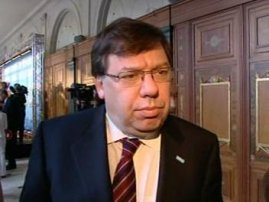
 Senator Dan Boyle (left), the chairman of the Green Party, has again warned that his party's support for the NAMA legislation "cannot be taken for granted".
In an interview with RTÉ News, Senator Boyle said that the Greens had "an internal process to complete" and that their members would ultimately make the decision.
This is the grass roots democracy for which the Green Party has been rightly famous over the past 25 years. But much of its actual people power has evaporated since many key people who opposed the Green's participation in government have left the party. It will be interesting to see in which direction the remaining Green Party grass roots will turn when they vote on NAMA.
In recent days, both Taoiseach Brian Cowen and Minister for Finance Brian Lenihan have expressed strong confidence that the Greens will back their NAMA legislation, if not outright then perhaps with some amendments. But I would not put a bet on that, if I were a betting man.
Meanwhile another Fianna Fáil backbench TD came out of the proverbial woodwork and said he would "require many more assurances from the Minister for Finance" before he could vote in favour of the proposed NAMA legislation.
 Mattie McGrath (right), Fianna Fáil TD for Tipperary-South, stated that he has received "a huge amount of calls from people worried about the NAMA legislation". Some of them, he said, were "demanding a referendum on the NAMA plan".
This would not be a bad idea, and if adopted by the government, a NAMA referendum could easily be held together with the second referendum on the Lisbon Treaty on October 2nd.
"It appears that a few hundred bankers have brought the country to its knees, and that the tax payer will have to pick up the bill," Deputy McGrath said, demanding that "the minister [for Finance] must provide detailed assurances to TDs at the Fianna Fáil parliamentary party meeting in Athlone next month".
Mattie McGrath, who was elected in 2007 for the first time and is therefore a 'new face' in the Dáil, added that he could "not trust the Department of Finance", given its record in dealing with the banking crisis to date.
Such clear and open words from a Fianna Fáil TD are rare, and very welcome. They show that not everyone in Fianna Fáil has lost the plot, and that there are still some government politicians with a portion of common sense left intact.
The question is how many of them are there, will their number be large enough to make a difference, and will they have the courage to stand firm, even if it could mean bringing down the government.
Should they do that, indeed, coming generations of Irish people will remember them fondly, and most of the Irish people alive would be most grateful.
Perhaps the Greens will beat the unhappy Fianna Fáil backbenchers to the post and pull the political emergency break. They will be punished by the voters for their support of Fianna Fáil anyway, if they stay in government or walk out. But if they could see their mistake of 2007 and have the guts to admit it, they might have a chance to survive as a party and - over some years - regroup and regrow again. (If they stick to Brian Cowen and Fianna Fáil until the bitter end, the Greens will most likely join the PDs as a sad footnote in political history.)
As much as the parliamentary holiday period is usually regarded as 'quiet', it is full of tensions and possibilities this year. Watch this space, and stay informed.
The Irish government is crumbling, and its days are numbered. I predict that it will not last until 2012, when the next regular general election is due to happen.
There are various elements that could end Brian Cowen's rule, from the Greens walking out to a backbench revolt in his own party.
And we should not forget the second referendum on the Lisbon Treaty. If the people of Ireland have the courage to follow their hearts, minds and conviction and say 'No' to Lisbon for a second time (on October 2nd), the government could collapse like a house of cards.
This would be the best thing that could happen to Ireland, and the first real step on the way out of recession and crisis.
The Emerald Islander
There are too many dark clouds hanging over Ireland at present, and in particular over the current government, which is slowly but steadily crumbling at the edges of its coalition.
Only recently two Fianna Fáil backbench TDs resigned the 'party whip', which means that they are no longer members of FF's parliamentary party group. They did not (yet) go as far as their former colleague Joe Behan from Wicklow, who left Fianna Fáil for good last year and now sits as an independent TD. But they might well follow Behan if things are getting any worse.
And there are more Fianna Fáil backbenchers who feel increasingly isolated and uncomfortable in their party. It only needs a few more of them to have the courage and guts to leave, and the government will be without a majority.
And there is of course the always present 'Green factor'. Ever since the Green Party made its fatal decision to join Fianna Fáil in a government coalition two years ago, a significant minority of party members are very unhappy with their leadership.
Many have meanwhile left the Green Party altogether, while others - like Brendan McCann, who was the Green candidate in Waterford in several local and general elections - remain nominally party members, but have gone into political hibernation.
In the recent local government elections the Green Party was almost wiped out completely and lost most of their previously 18 local councillors, while one of their former councillors - Nessa Childers - was elected to the European Parliament for the Labour Party on the same day.
So it is no surprise that the mood in the Green Party is pretty foul at present, and even within their small parliamentary group (of six TDs and two unelected Senators) there is a constant rumbling and grumbling, combined with great uncertainty where to go from here and how to proceed.
The government's plan to establish a National Asset Management Agency (NAMA) is the most controversial subject at present, and Taoiseach Brian Cowen is facing renewed pressure from the Green Party over it.
To make things worse for the Fianna Fáil leader, Mattie McGrath, one of his backbenchers from Co. Tipperary, has expressed strong doubts about NAMA as well.
 Senator Dan Boyle (left), the chairman of the Green Party, has again warned that his party's support for the NAMA legislation "cannot be taken for granted".
In an interview with RTÉ News, Senator Boyle said that the Greens had "an internal process to complete" and that their members would ultimately make the decision.
This is the grass roots democracy for which the Green Party has been rightly famous over the past 25 years. But much of its actual people power has evaporated since many key people who opposed the Green's participation in government have left the party. It will be interesting to see in which direction the remaining Green Party grass roots will turn when they vote on NAMA.
In recent days, both Taoiseach Brian Cowen and Minister for Finance Brian Lenihan have expressed strong confidence that the Greens will back their NAMA legislation, if not outright then perhaps with some amendments. But I would not put a bet on that, if I were a betting man.
Meanwhile another Fianna Fáil backbench TD came out of the proverbial woodwork and said he would "require many more assurances from the Minister for Finance" before he could vote in favour of the proposed NAMA legislation.
 Mattie McGrath (right), Fianna Fáil TD for Tipperary-South, stated that he has received "a huge amount of calls from people worried about the NAMA legislation". Some of them, he said, were "demanding a referendum on the NAMA plan".
This would not be a bad idea, and if adopted by the government, a NAMA referendum could easily be held together with the second referendum on the Lisbon Treaty on October 2nd.
"It appears that a few hundred bankers have brought the country to its knees, and that the tax payer will have to pick up the bill," Deputy McGrath said, demanding that "the minister [for Finance] must provide detailed assurances to TDs at the Fianna Fáil parliamentary party meeting in Athlone next month".
Mattie McGrath, who was elected in 2007 for the first time and is therefore a 'new face' in the Dáil, added that he could "not trust the Department of Finance", given its record in dealing with the banking crisis to date.
Such clear and open words from a Fianna Fáil TD are rare, and very welcome. They show that not everyone in Fianna Fáil has lost the plot, and that there are still some government politicians with a portion of common sense left intact.
The question is how many of them are there, will their number be large enough to make a difference, and will they have the courage to stand firm, even if it could mean bringing down the government.
Should they do that, indeed, coming generations of Irish people will remember them fondly, and most of the Irish people alive would be most grateful.
Perhaps the Greens will beat the unhappy Fianna Fáil backbenchers to the post and pull the political emergency break. They will be punished by the voters for their support of Fianna Fáil anyway, if they stay in government or walk out. But if they could see their mistake of 2007 and have the guts to admit it, they might have a chance to survive as a party and - over some years - regroup and regrow again. (If they stick to Brian Cowen and Fianna Fáil until the bitter end, the Greens will most likely join the PDs as a sad footnote in political history.)
As much as the parliamentary holiday period is usually regarded as 'quiet', it is full of tensions and possibilities this year. Watch this space, and stay informed.
The Irish government is crumbling, and its days are numbered. I predict that it will not last until 2012, when the next regular general election is due to happen.
There are various elements that could end Brian Cowen's rule, from the Greens walking out to a backbench revolt in his own party.
And we should not forget the second referendum on the Lisbon Treaty. If the people of Ireland have the courage to follow their hearts, minds and conviction and say 'No' to Lisbon for a second time (on October 2nd), the government could collapse like a house of cards.
This would be the best thing that could happen to Ireland, and the first real step on the way out of recession and crisis.
The Emerald Islander