Showing posts with label National Forum on Europe. Show all posts

15 June 2008

Apathy is the main Enemy of Democracy

A well-known proverb states that "every country has the government it deserves". The deeper meaning is that if the people would want to have a different political system or government, they could demand it and see it through. Free nations - like the Irish and the people of most western countries - have in regular intervals the opportunity to vote and thus elect those who will govern them for the next few years. This is, compared with the situation in centuries past, an important development, a great step forward and one for which previous generations fought long and hard. Many of our ancestors paid their desire for freedom and human and political rights with their life.

It is therefore sad and disappointing when I meet people who have "no interest in politics" and who subsequently also not bother to vote in democratic elections and referenda. Many of them are not even aware how much this ignorance and apathy damages them and their future, as well as the future of us all.
Imagine you are playing Football or Cricket, and half of your team never turns up, or just stands idle on the field without taking any part in the game. You would be annoyed, of course, and you would most likely lose every match you attempt to play. Sooner or later you would get rid of the idle idiots and replace them with active people.

Unfortunately we don't have the same option when it comes to a country and its citizens. If only 50% participate in elections and other elements of the political and socio-economic process, we cannot expel the inactive rest from the country. Sometimes I wish we could. But a free society includes also the freedom to be idle, ignorant or lazy. Neither is a crime. If it were, at least a third of every country's population would be permanently in jail.

In some countries - for example Australia and Belgium - voting is compulsory and those who do not cast their vote in an election are fined severely. While the majority of countries do not go that far, there are valid arguments for compulsory voting, seeing it as one of the duties a citizen has to his country and community.

There are political systems where the active participation of individual citizens is not required and even discouraged. One finds this in countries ruled by a dictator or a military junta, but also in monarchies and aristocracies, and most drastically in theocracies.
A democracy, however, requires democrats, people who actively participate in the political and socio-economic process. Without them and their regular involvement a democracy is impossible.
Which means that most of the western countries that regard themselves as "democratic" are in fact no real democracies. The Greek word demos is often translated as "people", but it is in fact more precise and means "the common people".
What we have at present in most "democratic" countries is at best a representative democracy, usually with a parliamentary system or - like in France and the USA - a presidential republic, modeled closely on the example of the ancient Roman Republic.

They are dominated by an elite class of professional politicians, administrators and civil servants who have very little contact and very little in common with the "common people". The latter are asked to vote in regular intervals (usually every four or five years) for representatives of various political parties, but that is where their participation in the political process ends.

In ancient Athens, the cradle of true democracy, this was not the case. There every citizen was actively involved, attended the public meetings and debates, and then voted on the proposals put before the demos, the assembly of all (free male) citizens (which numbered about 10,000 in the ancient city state of Athens).
There are almost no examples of true democracy in existence today. The only modern state that comes close is Switzerland, where every law or major political decision has to be approved by the people in a referendum. The tiny republic of San Marino (entirely surrounded by Italy) is also governed in a truly democratic fashion. Among the representative democracies of the West the Republic of Ireland is the only state with regular referenda on changes to the Constitution and other major political matters. This makes Ireland more democratic than other countries, even though the system of government is parliamentary.

It is quite obvious that over the past century the parliaments of the western nations have been turned into exclusive clubs of the powerful. They have their own special rules and perks, which no-one else in the country enjoys. Subsequently the rift between those who govern and the vast majority of the governed has become wider and wider, to an extent that they speak almost different languages (even when using English), have totally different lives and live in completely different worlds. Members of Parliament (in Ireland called deputies or TDs) have become a new kind of aristocratic (in the original meaning of the word) elite, and most of the western countries are now more aristocratic (ruled by the "best") than democratic.

There is very little education in matters political provided to our children. Most schools stay out of any serious debate and try to please everyone equally without taking a position. Unless a child is lucky and born to politically active parents, there is no real provision for its preparation to become a good and proper citizen. In fact, the present education system is not geared to produce active and responsible citizens at all. It turns children into docile, ignorant and uncritical customers of goods and services, for whom consuming, spending money and "having fun" (whatever that really means) has priority over everything else.
The fact that more Irish people voted in May in the Eurovision song contest than in June in the referendum on the Lisbon Treaty speaks for itself.

Nevertheless, one has to acknowledge that the turnout for the referendum last Thursday was a lot higher that it has been in previous Irish referenda for more than a decade. People were very concerned and felt stronger than ever that "something needs to be done" to stop our politicians from selling out the country's remaining democratic rights (for which the Irish fought over 750 years, with many giving their lives for the cause).

But still almost half of those who have the right to vote decided to abstain. This is a general trend in recent decades, not only in Ireland, but throughout the whole western world. In the short term this might actually suit some politicians and parties, but long-term such a large proportion of non-participating people is a serious danger for our freedom and political system. In history Ireland was several times lost to invading forces, mainly because her leaders did not combine their strength for a proper defence. We see the same happening again in our modern times, with almost half of our population remaining (mostly voluntarily) outside the political process and thus weakening the nation.

Since the referendum result was announced on Friday afternoon, many politicians are wondering why they did not get their message across and why almost half of the Irish electorate registered a double NO by complete abstention.

The answers should not be too difficult to find, since they are clear to me and other analysts. The ever ongoing alienation between politicians and the people, including the massive pay-rise for the Taoiseach and his ministers Bertie Ahern introduced shortly after the last election, is certainly one. The arrogance of politicians who think they know everything better, and the idea that they can bully the population into submission with empty threats is a second.
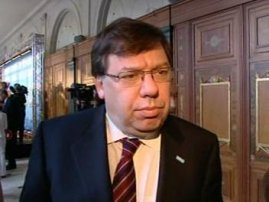
It does also not help if a politician is completely ignorant. (The fact that Brian Cowen and Charlie McCreevy had to admit in public that they had not read the treaty which they advised people to vote for was certainly a contributing element to their defeat.)

The most important point, however, is the lack of political and social awareness in the general population. This can only be changed with proper education of young people, augmented with a series of independent information campaigns, aimed at the ignorant and apathetic parts of the adult population.
The National Forum on Europe, which has done a great job in the months before the referendum, would be the right body to provide information on and increase awareness of Europe and the EU institutions. On national matters a similar forum, comprising members of all parties as well as relevant groups and organisations, should be formed.

There is a solution for every problem, but the first step on the way to a solution is the recognition and clear identification of the problem. Let us hope that our politicians still have two eyes, two ears, a working brain and enough common sense to lead the country out of its lethargic attitude.

The Emerald Islander

25 February 2008

Quo vadis, Europa?

Two weeks ago the National Forum on Europe (NFOE), which has promoted and facilitated a national debate on the European Union (EU), on its future and on Ireland's role in it since its establishment by the Taoiseach in October 2001, held a public discussion in Waterford. It was the second in a series of nine regional meetings to introduce to the general public the Treaty of Lisbon and open a public debate on it, in preparation for the Referendum with which the Irish people can accept or reject this latest of the European amendment treaties later this year.

Of the currently 27 member states of the EU, Ireland is the only one to hold a Referendum over the new treaty, as it is specified in our Constitution. Everywhere else the decision will be made by the national parliaments, with no direct involvement of the people. The reasons for this vary, as in several European countries there is no tradition of referenda, while in others the government does not see a need for asking their population or - like in France and the Netherlands - is keen to avoid such an undertaking. In both countries the forerunner of the Lisbon Treaty, which was known as the European Constitution, was rejected by the voters in national referenda in 2005.

Following these rejections, the TCE (Treaty establishing a Constitution for Europe) had to be abandoned and new negotiations among the member states, their governments and the EU Commission produced eventually the Treaty of Lisbon, which was signed by the EU Heads of Government in the Portuguese capital on December 13th, 2007.
The Treaty of Lisbon amending the Treaty on European Union and the Treaty establishing the European Community, as it is called in full, needs to be ratified by all member states before the end of this year, in order to come into effect on January 1st, 2009.

Five of the member states - France, Hungary, Malta, Romania and Slovenia - have already completed the ratification process, and the European Parliament also voted in favour of the new treaty last Wednesday. Given the wide-ranging changes it will impose on the EU structure and the future operation of the Union, the treaty is surprisingly low on the agendas of many member states. But in Ireland, the only country required to hold a referendum, the debate on the treaty and its many elements will be most elaborate, vociferous and emotional.

Two weeks ago in Waterford, and last week in Kilkenny and Tullamore (where further meetings took place), I got a good idea where this debate is now heading. The larger parties - Fianna Fáil, Fine Gael and Labour - are in favour of the Lisbon Treaty and campaign for a yes vote, with many business people and business organisations like IBEC following suit. They form a large bloc which includes government and opposition, and have certainly an advantage in numbers as well as money and general support. The Green Party is split over the issue (for details see my entry from 20 January) and now - bizarrely - campaigns on both sides of the argument. While Green Senator Deirdre de Burca was the main speaker for the treaty at the NFOE meeting in Kilkenny last Monday, the head of the party in Waterford (and repeatedly their local candidate in every election for years) Brendan McCann and former Green MEP Patricia McKenna, for example, are vehemently against it. All Green TDs seem to be in favour, but large parts of the party's lower echelons and grassroot members appear to be - for various reasons - against the treaty.

Not surprisingly, the few remaining members of the PDs are pro treaty, while most of the smaller parties on the left of the political spectrum oppose it. Sinn Fein is the only main party in Ireland that clearly stands and campaigns against the treaty. They are joined by a very mixed bunch of small parties (like the Socialist Party and the Socialist Workers Party), organisations like the Euro-skeptic think thank Libertas, and various groups and individuals, including a number of independent politicians. The most prominent of them is the independent MEP for the constituency of Southern Ireland, Kathy Sinnott (above centre), who was the main anti-treaty speaker at the NFOE Waterford meeting two weeks ago. The veteran European and former Fine Gael MEP John Cushnahan (above right) was the main speaker for the treaty. All the public meetings were presided over by NFOE Chairman, Senator Maurice Hayes (above left), a former senior civil servant from Northern Ireland.

There is not enough space here to outline the whole debate, but I will revisit the issue in future, when the lines of argument become clearer. For now I just like to raise what is for me the key question regarding the Lisbon Treaty, as well as any other development of the EU: Quo vadis, Europa? (Where are you going, Europe?)
Having read the text of the new treaty - as much as it was accessible to me - it appears to me that despite some major changes in the European Union's structure there is no clear direction defined for its future. When the original European Economic Community (EEC) was formed in 1957 by the six founder states (Belgium, France, Germany, Italy, Luxembourg and the Netherlands), it was envisaged as a common market and - as the late President of France, General Charles de Gaulle used to call it frequently - a "Europe of the Fatherlands". Elements of this idea are still present, so is this what we want Europe to be?

Others see the EU basically as a big, but powerless talking shop, some kind of smaller European version of the United Nations, with plenty of papers, committees, civil servants, interpretors and translators. In their opinion everything should be discussed and eventually regulated at European level, but all power would remain with the member states and their national politicians and parliaments.

The most daring view of the EU's future goes much further and wants us to become the "United States of Europe", modeled on the USA, with a completely integrated central power and states relegated to the second level of political power and influence.
In the Lisbon Treaty are elements of this already, such as the new permanent EU President and the new foreign affairs supremo, who is supposed to be responsible for all external affairs of the Union. But there are also elements of the other two models present, so I wonder if those who wrote and negotiated the new treaty actually know themselves where Europe is heading in the future?

I asked this question at the Waterford meeting, and Kathy Sinnott, MEP said that it was the best question she had heard all evening. Thank you very much for the kind comment. I am no politician and have no vested interests or axes to grind. I am just a humble historian with an independent mind who also analyses politics and comments on it. And I see it as one of my little purposes in life to highlight certain elements others tend to overlook.

Ms. Sinnott's answer was very interesting, as well as a little frightening. She said that we would not become a "United States of Europe" following the American model (and she should know that better than anyone, as she was born in Chicago). The old "Europe of the Fatherlands" was still in some way on the books, but no longer in the sense Charles de Gaulle would have understood and liked. But there is apparently a new dimension to the EU, not yet so clear to most of us in the West. MEPs from the new member states, who were not so long ago still part of the Communist East, have told Kathy Sinnott that the more they see and learn of the EU and its structure, the more it reminds them of the old Soviet-dominated Eastern Bloc.

This is a shocking revelation, which calls for further and deeper investigation. I will look into the matter myself and discuss it further with others, before I come back here to write more about it.
For now I can only advice everyone in Ireland to become familiar with the text and details of the Lisbon Treaty, and - if at all possible - attend at least one of the public meetings the NFOE is holding in various parts of the country. The next one takes place tonight at the Linenhall Centre in Castlebar, Co. Mayo. (For more details see the list below)

In a few months we will be asked to vote on the treaty in a Referendum, the outcome of which is of great significance for all of us in Ireland, our country and Europe as a whole. Never before in recent times has so much responsibility been placed in the hands of the Irish people, and I hope we will decide wisely on the matter. Otherwise Dustin will not be the only turkey we are sending to Europe...

The Emerald Islander
Further public meetings of the National Forum on Europe:
  • 25 February, 8 p.m. - Linenhall Centre, Castlebar, Co. Mayo
  • 4 March, 12.30 p.m. - Liberty Hall, Dublin City
  • 10 March, 7 p.m. - Old Ground Hotel, Ennis, Co. Clare
  • 11 March, 7.30 p.m. - Brandon Hotel, Tralee, Co. Kerry
  • 26 March, 8 p.m. - Radisson Hotel, Letterkenny, Co. Donegal