Showing posts with label Peter McLoone. Show all posts

13 September 2009

FÁS Board Members will resign

The chairman of Ireland's national training and employment agency FÁS has said that all its board members will resign in the wake of a report which showed a massive waste of taxpayer money.

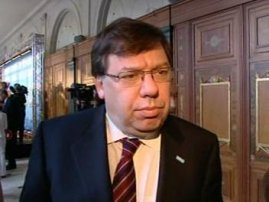
Speaking earlier today on the This Week programme on RTÉ Radio 1, Peter McLoone (left) - who is in his day job the Secretary General of IMPACT, Ireland's largest public service trade union - stated there was "no time frame" from either the Taoiseach or the Tánaiste for the appointment of a new board, but that this was something to be clarified early next week.

He emphasised that the present board was only appointed in 2006 and was therefore "not responsible for earlier follies and misbehaviour" inside the agency. However, the board would not stand in the way of change and co-operate completely with the transition.

McLoone defended the board's actions and said it had "dealt with any issues that came before us". He and the whole board would "take responsibility for anything that happened while we were in office".

The move follows strong criticism of wasteful expenditure, including massive overspending on promotion at the agency, specified in detail in a report by John Buckley, Ireland's Comptroller & Auditor General, who investigated FÁS for almost a year. (see my entry of September 10th)

The investigation was ordered last year by the Tánaiste Mary Coughlan (right), who is in her capacity as Ireland's Minister for Enterprise, Trade & Employment responsible for FÁS.

However, she only acted after the independent Senator Shane Ross (left) had - in a lengthy and painstaking investigation of his own - exposed massive irregularities and waste of taxpayers' money on a colossal scale inside the state agency.

Without courageous and independent people like Shane Ross the truth about FÁS might still be unknown to us and subject to the usual government cover-up and denial.

The Emerald Islander

27 November 2008

PAC begins Investigation of FÁS Scandal

Today a member of the Board of FÁS has appeared before a Dáil committee in Leinster House in Dublin and said that "the approval of some expenses" at the State's training agency was "fundamentally wrong".

Niall Saul (left), who is one of the four employers' representatives on the 17-member board, told the Public Accounts Committee (PAC) of Dáil Éireann that "a root and branch investigation is required".
He said that following last night's board meeting, it was clear that there was "a failure of control and oversight of expenditure".

Mr. Saul is the HR Director of McNamara Constructions and held similar positions before with Irish Life & Permanent (owners of the permanent tsb bank) and - until 1997 - with Waterford Crystal. He is also the chairman of the Audit Committee of the FÁS Board.
Amazingly Mr. Saul was the only member of the entire FÁS Board prepared to attend today's hearing, and one has to wonder what a bunch of spineless cowards the other 16 members must be.

Former FÁS Director General Rody Molloy (right), who has resigned two days ago after coming under severe pressure from the media and public outrage, refused stubbornly to appear before the PAC (saying he was "no longer in office") and to account for his agency's affairs and his own eccentricities.
This is the man who was praised by Taoiseach Brian Cowen twice in the past four days. (see my entries of November 25th & 26th)

PAC Chairman Bernard Allen (Fine Gael) said that he finds it "incredible that members of FÁS can just ride into the sunset without holding themselves accountable".

Deputy Allen (left), who represents the Cork North Central constituency, stated that it was "regrettable that Mr. Molloy is not in attendance", but he said other members of FÁS would be able to address issues, as they were also in the organisation during the time being examined.

He added that he was "inviting" Mr. Molloy to come before the committee next week. There were also speculations in Leinster House if Rody Molloy could be forced by law to attend the next PAC meeting.

Bernard Allen also sent a formal invitation to FÁS Chairman Peter McLoone, who in his main job is Secretary General of IMPACT, the (with about 55,000 members) largest public service trade union in Ireland.

McLoone (right) was appointed as Chairman of FÁS on December 23rd, 2005, succeeding Brian Geoghegan, the husband of Health Minister Mary Harney. (When the two got married in 2001, Harney - then the Minister for Enterprise, Trade & Employment - was in fact Geoghegan's boss and supervisor, as her then Department controls FÁS.)

Appointed for a five-year period, Peter McLoone could remain as FÁS Chairman until the end of 2010, unless he has the decency to step down from his position. In the light of the recent revelations, McLoone has certainly not done a good and proper job in overseeing the running of the agency.

The PAC also heard today statements from civil servants from the Department of Enterprise, Trade & Employment and the Department of Finance.

In a further development of the affair, Fine Gael TD Jim O'Keeffe (left) told the PAC that he has established that State travel policy did not include any entitlement to first class travel. (On Monday Rody Molloy said live on air - in an interview with Pat Kenny on RTÉ Radio 1 - that he was "entitled to first class flights".)

Deputy O'Keeffe, who represents the Cork South West constituency, was questioning FÁS Assistant Director General Christy Cooney - one of the seven people who hold this title, and thus a member of the FÁS Executive Board - about the organisation's travel policy.
Besides his senior job with FÁS, Christy Cooney (on the photo - with Sean McCague - right, holding a book) is also the incoming new president of the Gaelic Athletics Association (GAA), the organisation in charge of Ireland's popular national sports Hurling, Camogie and Gaelic Football.
The 52-year-old from Youghal, Co. Cork has long been involved with the GAA, especially in the southern province of Munster, and was elected in April to succeed the current GAA boss Nickey Brennan next year.

Meanwhile FÁS has located credit receipts for the € 32,000 worth of flights to Florida, which the organisation earlier told the Committee it had failed to get refunds for. It said that "the credit notes were incorrectly coded, due to an administrative error". Which means that sloppy work at the FÁS head office is costing the taxpayers of Ireland € 32,000 for absolutely nothing in return.
This amount should be deducted from the generous salary of the FÁS director responsible and returned to the Department of Finance.

In a separate statement the Taoiseach declared that the Board of FÁS "now needs to get back to work and appoint an interim Director General soon, following the resignation of Mr. Molloy".
Brian Cowen (left) said that "it is important the Board of FÁS continues to operate". Instability should not be re-created and a sustainable and credible way forward needed to be found.

He seems however completely unconcerned with the massive scandal that brought down Rody Molloy and might yet claim more heads from the senior staff of FÁS, as ever more details emerge about the self-indulgent and irresponsible lifestyle the agency's executives enjoyed for years at taxpayers' expense.

With his cavalier attitude and - even worse - his praise for the main culprit of the scandal, Brian Cowen associates himself with the corrupt spongers and thus becomes co-responsible, by deed and by association, even if he himself might not have directly benefited from the colossal misuse of public money. As the Taoiseach he is responsible for the whole government, including all its agencies, anyway. And as the Minister for Finance until May of this year he was also directly responsible for the nation's money, in particular what is spent in any part of the public sector.

So, either Brian Cowen knows a lot more about the FÁS scandal - and perhaps many more like it in other government agencies - than he is willing to admit in public, or he is immensely stupid. In either case he is not the right man to be Taoiseach and should resign immediately.

The Emerald Islander

08 September 2008

National Pay Talks continue in Dublin

While the country as a whole (and especially the South East) is still recovering from yesterday's All Ireland Hurling finals, life goes on, focusing on more serious matters. In Dublin the crucial talks on a new national pay agreement continue in a gloomy atmosphere, overshadowed by the economic recession the country has fallen into after more than a decade of massive boom and excitement.

The employers' lobby group IBEC has eventually decided to join the talks this afternoon, while representatives of the trade unions and the government resumed negotiation this morning.

Going into the talks, some of the unions rejected out of hand the notion of a pay freeze, which has been mooted especially by IBEC (and supported by some members of the government).

Both employers and trade unions are trying to secure a new national pay agreement by Friday, but the signs are not particularly encouraging.

Betty Tyrrell-Collard of the CPSU - which represents lower paid public service workers - declared that a pay pause for her union's members would be "an absolute non-runner".
She said a pay pause for people who earn more than € 50,000 per year would be acceptable. But she added that clerical staff that are low paid and work hard to secure bonuses for higher paid positions could not suffer.

Jack O'Connor, general president of Ireland's largest trade union SIPTU, said he wanted to "make sure a deal could be done". But the unions would "not agree on an exercise to insulate businesses profits".
He refused to reveal details of what SIPTU would be demanding, but said that all unions needed to decide on a way forward.
"There is a broad consensus on a deal that will take the economic condition into consideration and protect lower paid workers," he stated before entering the talks.

John Douglas of the Mandate trade union (which has many members employed in the retail sector) said that "there will be no deal unless the low paid are protected".
He pointed out that the ball was in the court of the employers, and "something will have to be found to deal with the difficult issues for low paid workers, who have not been dealt with fairly in previous agreements". Now more than ever efforts were needed to deal with the low paid.

Larry Broderick of the Irish Bank Officials Association said he was not optimistic heading into the talks, adding that "the government needs to put something constructive on the table if the talks are to be successful".
He emphasised that his staff would not react well to a pay freeze and said that "a new structure is needed and new legislation on constructive bargaining as well". He also suggested a "flexible arrangement on pay at local level, so different approaches can be taken in different companies".

Peter McLoone, general secretary of IMPACT, said he hopes that at the end of the week a clear package for public sector workers will be on the table. What the government has in mind with regard to a public sector pay freeze "must be clear" and "the purchasing power of low paid people within the public sector must be protected".
"It makes no difference what sector you work in when it comes to buying products and trying to live."

Well, Mr. McLoone - as usual - puts things clear and simple as they are. And he is absolutely right with his statement. Given the massive and constant increases in the costs of living, especially the rocketing prices for food, fuel and electricity, this is the most important element in the pay talks for the vast majority of Irish people.

Taoiseach is "available to assist"

Meanwhile Taoiseach Brian Cowen has stated that "all sides in the talks must take account of the changed economic circumstances".
Speaking in Tullamore (in his home county Offally), Cowen said he would be "available to assist the parties on an ongoing basis, as I was indeed in the last phase, which - unfortunately - did not mean that the fact that I was available brought about a successful conclusion".

Asked if he was more optimistic about a successful outcome this time, Cowen declared that there was "a growing realisation that there are a lot of pressures in the economy". He added that the many job losses this year are "a reflection of the downturn in economic activity".

He said that "we do need to come up with an affordable solution for the medium term, so we can find space to bring about changes for the better" in what he called "a very challenging international environment".

26 June 2008

Trade Union Leaders reject Pay Freeze Idea

The general secretary of the Irish Congress of Trade Unions (ICTU), David Begg (right), has rejected a call from the employers group IBEC for a pay freeze to help tackle the economic recession. In a robust response he said that IBEC had "a brass neck to suggest pay restraint for low-paid workers at a time when many top executives are receiving millions in salaries".

David Begg was obviously angered by the call for a wage freeze and said that ICTU would make no sacrifices to continue the Social Partnership model. He outlined increasing pressures facing the average worker - especially the low paid - including food and fuel increases, and hikes in interest rates. For those people, he explained, a pay pause was "a non-starter" which he was not even prepared to entertain.
He stated that - because of inflation - many workers had already endured a pay freeze, if not a pay cut, over the past two years and added that he would not advocate sacrifices on behalf of workers to maintain social partnership in its current form when others in society had "their snouts in the trough".

The Taoiseach has declined to comment directly on David Begg's comments. Speaking on his way into an IBEC dinner in Dublin, Brian Cowen said that Mr. Begg was expressing his own view.

In a separate statement the Impact trade union has described the proposal of a pay freeze across the public service as "an absurd proposition".

The union’s general secretary, Peter McLoone (left) said that the suggestion was neither sensible nor acceptable, as workers would not support a social partnership deal which made no provision for a pay increase.

Speaking on RTE Radio, he said there was a large number of public sector workers whose pay was well below the average industrial wage.
“It is an unrealistic proposition to ask people of those levels of earnings to go without any increase for the duration of an agreement,” he explained.
“Very little progress” had been made at the partnership talks which commenced two months ago. All sides had yet to fully engage on the most important issues.

The Emerald Islander

15 May 2008

IMPACT sees Benchmarking "dead in the Water"

IMPACT, Ireland's largest public service union, may reject any new national pay agreement unless the 'Benchmarking' pay determination system is radically reformed. Speaking at the IMPACT conference in Kilkenny, the union's General Secretary Peter McLoone (photo) said that as far as his members were concerned, 'Benchmarking' was "dead in the water", after not delivering pay increases to most of them.

McLoone said that voting on the next proposed pay agreement, which is currently negotiated, would be the first opportunity to vent the trade unions' frustration about what they saw as "a flawed mechanism".
But he warned if the outcome of the current pay negotiations included provision for another similar 'Benchmarking' process, he did not think his members would accept it. He also stressed that public servants should not and did not want to lead private sector pay in the labour market. The gap between higher and lower paid workers in the public service should not be getting wider and the same standards of fairness must be used to assess the pay of all, regardless of their place in the hierarchy.


Delegates at the conference endorsed a motion calling for a genuine review of the public service pay determination system to ensure that future pay comparisons are "made with good private sector employers", that genuine reforms of public services are rewarded and that individual pay anomalies can be addressed.


Earlier, Peter McLoone said that a new pay deal could well be achieved, but it must include progress on social objectives and public services. Despite big challenges "a deal is doable if all the social partners have enough ambition".

The Emerald Islander