Showing posts with label Afghanistan. Show all posts

20 August 2009

Coloured Pencils for the Blind

Today the people of Afghanistan were called to elect a new President. This is the second time such an election takes place under the general rules of a 'democratic' system.

The first time, in October 2004, the incumbent Hamid Karzai (photo below, inspecting a guard of honour in Kabul) was elected President. He is hopeful to be elected for a second term, but he is not popular with everyone.

Karzai is a Pashtun (or Pathan) and son of a wealthy and influential tribal leader from the south of the country. With close to 40% of the population the Pashtuns are the largest ethnic group in Afghanistan and have provided the ruling elite ever since the establishment of the first singular state called 'Afghanistan' in 1747. Their territories are predominantly in the south, and they also make up a significant minority in neighbouring Pakistan.

There are more than a dozen other distinctive nations and ethnic groups in Afghanistan, of which the Tajiks - with ca. 37% of the total population - are the largest (and the second-largest in the country). Their territories are all in the north, and over centuries there has been a balance of power between the southern Pashtuns and the northern Tajiks.
All other ethnic groups are much smaller and less well represented in the political structure and make-up of Afghanistan. The two most visible of these minorities are the Hazara and the Uzbeks, each with about 9% of the overall population.

Politics in Afghanistan is based on strict tribal loyalties and age-old alliances between leaders of various clans. Even though there have been political parties for some time, they too reflect only too clearly the tribal structure of the country. The idea of an 'Afghan nation' has not arrived yet in the high and rugged mountains that control the links between the North and South of Asia, as well as the links between the West (Iran) and the East (China) of the continent.

Since the overthrow of the monarchy in 1973, some Afghan politicians have tried to establish some form of nationalism, but it has never worked or lasted for long. All their efforts ended in even more tribal conflict, which is still the predominant situation in Afghanistan.

Only a complete fool like George W. Bush, with no idea of history and ethnic structures outside the USA, could ever even think of invading Afghanistan and hoping to control it. Many nations and military leaders have tried - and failed - in such enterprises before.
Even Alexander the Great, perhaps the best army commander of all times, failed in his effort to control the mountains of the area that is now Afghanistan. And he was wise enough to realise that and withdrew his forces gracefully, after having founded a city that bore his name.

During the 19th century Britain tried - and failed - twice to occupy and rule Afghanistan and took massive casualties in the process. One of their expeditions entered the country with 42,000 men, of which only one single officer - an army surgeon - returned alive to tell the tale of total defeat.
More recently the Soviet Union invaded Afghanistan from the north - at Christmas 1979 - with more than 120,000 troops. After nine years of fierce and bloody guerrilla war that helped to bring the USSR to her knees and end her existence, the Russians withdrew again - with a very bloody nose and tails between their legs - in 1988.

It has always amazed me that no-one in the political and military leadership of the USA warned George W. Bush of the dangers any military action in and against Afghanistan would bring to the invading force. Especially since they should have known what was waiting for them, after they had supported massively - but in a covert operation - the Afghan Mujahiddin (freedom fighters) in their struggle against the Soviet occupation force.
Perhaps they did warn him, but Bush - in his usual combination of ignorance and self-importance - did not listen. He just made one of his arogant and bellicose statements and sent his troops into war against a people who have not been defeated by anyone in more than 3000 years.
Like a blinded bear he just walked into the unknown, into the largest bear trap on Earth.

This was in the Autumn of 2001, and ever since Afghanistan has been - once again - an occupied country. The difference is that the current occupiers - the USA, the UK, NATO and a mixed bag of smaller contingents from various countries - claim that they are there 'to establish Democracy' in Afghanistan.

For the people of Afghanistan that means nothing. They remember only too well that the USSR was there not so long ago in order 'to establish Socialism', another idea with no value or meaning for tradional Muslims who live on the technological level of the Middle Ages.


- more to follow -
(I have to get some sleep first, sorry)

09 October 2008

Taliban destroys Irish-run School in Pakistan

A group of fighters from the Islamic fundamentalist Taliban movement has attacked and destroyed a girls' school run by Irish Presentation Sisters in the Swat district (on the map coloured yellow) of North-West Frontier Province (tinted grey) in Pakistan.
Fortunately no-one was killed or injured in the onslaught, and it is understood that during the time of the attack none of the Irish sisters were actually present in the compound.
There were both Muslim and Christian students enrolled at the school, which was established by the order of Catholic nuns in 1965 and had in more than 40 years not encountered any hostility.

But this unprecedented aggression against a western and Christian institution highlights the increased tension in Pakistan, whose government is an uneasy ally of the West (and in particular the USA) in the fight against its own radical Muslim groups, most of which have their bases in the semi-autonomous and traditionally unruly North-West Frontier Province.
This area on the border to Afghanistan is populated by various mountain tribes that have - since the days of Alexander the Great - never accepted the full authority of any central government. During the British Raj in India the region was a constant source of rebellion and instability, and this has not changed since the partition of India and the foundation of Pakistan in 1947.

Analysts have observed that significant numbers of Taliban fighters have moved into this area since they are under regular attack by US, British and NATO forces in neighbouring Afghanistan. Some intelligence services even believe that Osama bin Laden might be living in hiding there, though so far no evidence for that assumption has been found.

The Taliban movement of radical Islamic scholars originated in Pakistan during the time of the Soviet occupation of Afghanistan (1979-1989) and received massive funding as well as military training and weapons from the USA (and further support from Pakistan and Saudi Arabia).

In 1990 their fighters moved into Afghanistan and participated in the civil war that erupted after the withdrawal of the Soviet troops. By 1996 the Taliban controlled most of the country and formed a new fundamentalist Islamic government in Kabul. At that time they still received political backing, substantial funds, weapons and military support from Pakistan and the USA.

But in 2001 - after the terror attacks of September 11th - their American allies turned against the force they helped to create and began to call the Taliban fighters "terrorists".
Their regime was defeated by US troops and forces of the 'Northern Alliance' of tribal warlords in late 2001 and has been fighting back ever since.

Ideologically the Taliban are radicalised fundamentalist Muslims. During the time they ruled Afghanistan (1996-2001) they imposed a medieval Islamic regime, which forced all men to have long bushy beards and all women to wear the full-body cover known as the Burka. They closed most libraries and bookshops, forbade the playing of and listening to music, and closed all schools for girls. Employment of women and education of girls became illegal, and breaches of that law were punished by death. This archaeic and violent ideology explains the destruction of the girls' school in Swat, though it does of course not justify it.

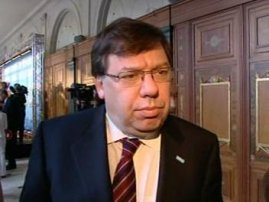
Micheál Martin (photo), Ireland's Minister for Foreign Affairs, has described the attack as "an enormous setback for the girls and families of the area around Sengota and in the whole Swat district".

Given the current political instability in Pakistan and the insecurity in the area it is doubtful that the school will be rebuilt any time soon. One has in fact to admire the determination and courage of the Presentation Sisters to establish the school at all in such a dangerous and volatile area.

The Emerald Islander

15 May 2008

Human Rights - a Challenge for us all

There is hardly any politician in the civilised world who will not publicly commit himself (and his party) to respect, uphold and defend Human Rights. This is good, and a great achievement for many campaigning groups and organisations (of whom the most prominent is undoubtedly Amnesty International). After all, only 65 years ago the world's nations were occupied with killing and destroying each other, and two centuries ago slavery was still seen as 'normal' by the majority of political (and religious!) leaders.

However, when it comes to implement the well-spoken words into policies and action, the record of the same politicians is far less impressive. In fact some of the most vociferous supporters of Human Rights are regularly found to be liars and hypocrites, who abuse in practice the same Human Rights they seem to support and uphold in their speeches.

The list of these politicians is long, too long to be published here. But I am sure that most readers will know plenty of the names that come to my mind. So I will concentrate for today - May 15th, the day Bloggers unite in a concerted international action for Human Rights - on some of the worst cases and their words and deeds.

Undoubtedly the worst hypocrite of our time is George W. Bush, who takes every opportunity to speak about "freedom, democracy and human rights". How much would one wish that he actually means what he says. But the most powerful man alive on this planet always speaks - as Native Americans used to put it so fittingly - with a forked tongue.
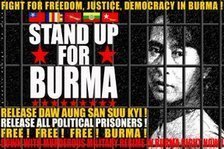
Occasionally he makes public gestures, such as awarding some medal or accolade to prominent Human Rights' campaigners and sufferers from political oppression and injustice. They include the Dalai Lama (above left) and Aung San Suu Kyi (above right), who are both the legitimate leaders of their nations - Tibet and Burma - and both recipients of the Nobel Prize for Peace.

But the same George W. Bush is responsible for the worst crimes and Human Rights' abuses in modern time. The wars in Afghanistan and Iraq, and the ongoing illegal occupation of these countries by US and allied troops (for seven and five years respectively) have killed more than a million people, most of them innocent civilians. Even more were wounded, and further millions - including more than four million Iraqis - were made homeless and driven into exile as refugees: homeless, jobless, penniless and by now almost forgotten by the world. Bush is also responsible for the systematic torture of thousands of political prisoners - at Guantanamo Bay and in secret CIA prisons in foreign countries - and has personally vetoed the banning of the infamous torture technique named 'Waterboarding' by the CIA. In fact it is simulated drowning and was originally invented by the Inquisition of the Catholic Church in the Middle Ages.
The CIA, with Bush's personal approval, re-introduced this barbaric method some years ago. For that alone Bush and every CIA agent involved should be brought to the International Court of Justice. Sadly that is not going to happen, as the USA simply do not recognise the court.

One should also remember that the same George W. Bush, during his time as governor of Texas, had more prisoners executed than all other US states together. Nearly 200 US citizens died in six years on the orders of Governor Bush.
More than 4000 US soldiers have died meanwhile in Iraq, where he sends them as his human killing machines, and nearly 500 in Afghanistan. Additionally the lives of more than 60,000 US soldiers are blighted forever by serious wounds, many of them so severe that they will disable the wounded soldiers for life.

There is no shortage of public criticism of Bush, his henchmen and their criminal actions, but it only comes from ordinary people, including academics, writers, journalists and bloggers. Hardly any fellow politician has the guts to stand up and speak openly against the murderer, torturer and hypocrite in the White House.

As recommendable exceptions one has to mention Venezuela's President Hugo Chavez (right), Bolivia's President Evo Morales and Cuba's new leader Raul Castro - three men whose countries and people have suffered more than enough from US imperialism. They are not only very brave, honest and courageous, but also very popular with the people.
So there is, after all, some hope...

The vast majority of the world's political leaders, ministers and parliamentarians are cowardly bowing before Bush and his regime of systematic Human Rights' abusers. I suppose that some countries are simply too small and too weak to even raise their voice against the USA. But what about the strong nations?
When has one ever heard a critical word from Japan, still the second-largest economy on the planet? And how does Europe fare? The mighty European Union (EU) with meanwhile 27 member states is sadly also a gathering of hypocrites and lickspittles, following eagerly the lead provided by the White House. No-one seems to have learned any lessons from history, as if Stalin, Hitler, Mussolini and a dozen other dictators of the 20th century had never existed.
In our schools children learn little enough about them and their crimes, and what they learn there are usually stereotypes and twisted half-truths. Those in power are not really interested in well-educated and informed people. Tranquil and half-witted consumers, addicted to alcohol and various other drugs, are much easier to rule and control than enlightened and active citizens.

Subsequently there is little awareness - and even less open criticism - of the world's modern dictators and oppressive regimes. Since Russia is supposed to be our friend now, we close our eyes completely on its dark sides. There are no reports in our media about the brutal war in Chechnya, where Russian troops kill civilians at will and behave even worse than the Americans in Iraq. No mentioning
either of the crimes against humanity that go on inside Russia, where power is now shared between ex-KGB officers (like Prime Minister and ex-President Vladimir Putin) and a mafia of common criminals which is well-organised, well-armed and absolutely ruthless. Anyone who dares to stand in their way, or even to speak about them in public, is in mortal danger. The number of journalists, writers and Human Rights' activists that have been murdered in Russia since 1991 is growing ever larger. If it were not for Amnesty International, we would never hear and know about them.

An even crueller and more cynical regime rules China, which has become a truly hybrid country: A totalitarian Communist state with absolute power, exercised by the one existing party, but with a more and more capitalist and consumerist mentality and society. Having enough manpower, available at very low cost, China has turned itself into the biggest workshop on the planet, manufacturing now about 85% of all basic consumer goods for the industrialised countries of the West. Many
western books are also printed there, by people who cannot read English, while China is still blocking and filtering news from the free world, especially online.

Currently the country is in Olympic fever, preparing for this year's games in the capital Beijing. In a very Confucianist way the Chinese leadership is using the event also to humiliate the West (and the rest of the world) and make them bow before China's new industrial power. Protesters against the brutal occupation of Tibet (since 1952) are arrested, beaten up or simply shot in the streets, while at the same time the Olympic flame is paraded around the world by the Chinese in an unprecedented way. Showing off their newly gained strength, the Chinese leadership demanded that a stick with a flame would be treated by the world's major nations like a head of state, with 2000 policemen out on duty in London, and a similar sad spectacle in Paris.
In the past the flame travelled around a host country, carried by numerous athletes. There has never been any need for police or security, and everyone along the way cheered happily. But this year things are different. China managed to turn the Olympic flame - once a symbol of free sporting contest between the youth of the world - into a symbol of hypocrisy and oppression. The fact alone that it is surrounded at all times by ten burly 'flame attendants' (a job and word that did not exist until the Chinese government created it) says enough. It is a spectacle for political reasons, and like Hitler in 1936 the Chinese leaders use the Olympic Games to show off their newly gained strength.

What is the reaction of the 'free' world? Silence, ignorance and complacency. Having a few hundred hours of sports on TV this summer seems more important to most of us than the political conditions in China, and the freedom and well-being of the people of Tibet plays almost no role in most Westerners mind. Bestowing the odd honour on the Dalai Lama now and then is nothing but poor window dressing and no help for the Tibetans at all.
Being in economical hock to China now, the West is caught in its own trap. The capitalist demand for ever cheaper products, manufactured for less and less cost, has lead to the outsourcing of our manufacturing industry. Most brands you can think of as famous, fashionable and stylish in the West have their goods produced in Chinese sweatshops for years. People still pay high western prices for them, while a pittance is paid to Chinese workers. The balance fills the pockets of the super-rich in the USA, Japan and Europe.

In order to produce all the things the world wants to buy, China is in need of huge amounts of resources and raw materials. This has lead to a new form of neo-colonialism, especially in Africa, where now China call the shots in many of the 'independent' African countries. This suits many African leaders a lot better than co-operation with the West, because China never makes any comments or demands on them regarding Human Rights. Thus China is very happy to be the main supporter and arms supplier of the militant Islamic regime in Sudan, which commits genocide on a large scale in their western province of Darfur. The western world stands stunned and gapes, shouts and makes demands. The result: no change.
If our politicians would really be interested in Human Rights and the protection of innocent people from all kinds of harm and oppression, the US Army would be in Sudan instead of Iraq. (And there is even oil in Sudan...)

Africa is a subject one could - and should - write books about. It is a vast continent, with vast resources and riches. It could be feeding itself easily, produce plenty of food for export and give its people a live of great wealth and comfort. So why is it that Africa is the poorest, least developed and most suffering of all the continents?
Once again it comes down to the will of political leaders to act or not, to uphold Human Rights or to prefer shady deals with warlords and cleptocrats instead. Due to western hypocrisy and the selfish greed and brutal methods of Africa's tribal leaders the continent is experiencing now four decades of war, instability, turmoil and economic collapse. The obvious results are famine, genocide, destruction and the complete decline of culture and society, in the absence of law, order and proper administration.
Western countries, and especially the former colonial powers, carry a lot of the responsibility for this. But like the Thirty-Years War that devastated central Europe and especially Germany in the 17th century in a similar fashion, the catastrophe has many fathers and could not happen without the co-operation of the willing soldiers on the ground. The Thirty-Years War only ended when both sides ran out of people, food and other resources, after destroying and depopulating vast areas of Germany. If no alternatives are offered by the world's leaders - and especially the leaders of powerful nations - this is most likely the fate of Africa, too. They will carry on killing each other, destroying their infrastructure and devastating their fertile lands until no one has enough power and resources left to carry on.

One cannot write about Africa at present without mentioning Zimbabwe, where President Robert Gabriel Mugabe - a Jesuit-educated Catholic - has declared total war on the entire population. Having destroyed the economy of this once rich, prosperous and very fertile country, Mugabe is now bullying his people with brute force into submission, trying to make them elect him again as President. With over 80% unemployment and meanwhile 250,000% inflation (which is a sad all-time world record, making even the massive inflation that blighted Germany in the 1920s look insignificant) Zimbabwe is on its knees. Most people spend all their time with nothing else but searching for a little bit of food, in order to survive another day.

Mugabe (pictured here in one of his Rolls Royce state cars at an official function) and his clique of criminal henchmen still live a life in luxury, while ordinary people have two choices: death by starvation or fleeing into neighbouring countries. There are now nearly four million Zimbabweans living in South Africa alone. Nevertheless, South Africa's spineless President Thabo M'beki sees "no crisis in Zimbabwe". His lack of leadership, action and humanity makes him one of the worst of the political hypocrites alive, and even his own people have now lost confidence in him and elected Jacob Zuma as the new leader of their ruling party, the African National Congress (ANC).

The list of Human Rights' abuses and hypocritical politicians is long, and so is
meanwhile this text. There is so much more one could say and write, but I will draw to a close, to keep this article to a readable length. One could, however, not end a post about Human Rights without mentioning Burma. This poor and long-suffering country, almost unknown to most Westerners, is currently experiencing its probably worst period in centuries.
Devastated by the forces of cyclone 'Nargis', which wiped out whole communities and killed a very large, but still unknown number of people (the early estimates are between 70,000 and 250,000), the south-western part of Burma, including the largest city (and former capital) Rangoon, is a disater area for the past two weeks.
Despite that, and the inability to deal with a catastrophe of that dimension alone, the Burmese military junta is still refusing foreign aid workers visas and entry to their country. In an act of cruel cynicism, matched only by Stalin and Hitler, the Burmese generals went ahead with a nationwide referendum on a new constitution (which will keep them in power for the foreseeable future) while people died of injuries and starvation unattended on the roads outside the polling stations!
Once again western politicians made speeches and demands, and than backed down and left it at that. France is the only western country that suggested to invoke a special clause in the UN Charta which allows foreign intervention under exceptional circumstances, even without co-operation from the target country's government. But since no-one else picked up the idea, it died even faster than the victims of cyclone 'Nargis' in Burma.

If the leaders of the western world were serious in their many verbal commitments to freedom, democracy and Human Rights, American and international troops would not be in Afghanistan and Iraq, but in Burma, Chad, Congo, Somalia, Sudan and Zimbabwe. There would be no jovial business deals with the Russians, and no bowing down before the cruelties of the Chinese.
But as long as the majority of people in the western countries does not care, keeps electing the wrong people to positions of power and prefers getting drunk to taking an active part in politics, there will be no change.

No-one can change the world single-handed, but every single hand put to a good cause will help to make the world a little bit better. The challenge is there, for you, me and everyone. Let's see who takes it up, let's see if we want a decent future for this planet and the human race!

The Emerald Islander

18 January 2008

Charlie Wilson's War

As the matter of Afghanistan has come up yesterday, this might be a good time to add a little film review related to the subject. (I hope you do not mind that I use this weblog also to review books, films or even computer games now and then.)

Like most films I watch, the one I want to talk about today reflects on real events. It is called Charlie Wilson's War and based on George Crile's book with the same title (first published in 2003).
Both book and film tell the most unbelievable - but entirely true - background story to one of the most secret and successful intelligence operations in modern times, Operation Cyclone. This was the code name for Americas covert operations in Soviet-occupied Afghanistan during the 1980s, a secret war against Communism the CIA directed through various channels, including Israeli defence industries, Egypt's Ministry of Defence, Pakistan's government, army and inter-service intelligence agency (ISI), the Saudi Royal Family, and various other individuals, organisations and groups. Many of these groups, at the time known under the collective name "Mujahideen" (Arabic for strugglers), have meanwhile disappeared into history, but some of the names on the CIA's "list of friends" are still of relevance. They are Hezbi Islami (lead by the fanatic Gulbuddin Hekmatyar), Al-Qaeda (lead by the scholar Abdullah Yusuf Azzam) and Maktab al-Khadamat - or "MAK", as the Americans called them - (lead by Osama bin Laden). *

But even though the film is about Afghanistan and shows plenty of it, some with original footage from reconnaissance and news reports of the time, its main focus is the title hero Charlie Wilson, a member of the US House of Representatives from East Texas. A Democrat with very liberal views and a gregarious personal lifestyle, Charles Nesbitt Wilson (left, and not to be confused with the now sitting Congressman Charlie Wilson, a Democrat representing Ohio) was not the kind of politician one would find centre-stage in the limelight of national politics. Quite the opposite, in fact. But Wilson, a former naval officer, had some unusual friends, among them the colourful Houston socialite Joanne King Herring, a woman endowed equally with great wealth and great beauty. Her special concern for the plight of Afghani refugees who fled to Pakistan in their millions after the Soviets had invaded and occupied their country led to Wilson becoming interested as well. And even though a rather small fish in the great pond of Washington D.C., the Texan Congressman sat on the right committees, among them the one that appropriates secret funding for the CIA and other US intelligence agencies. With a combination of persuasion, political horse trading and using every trick in the book Wilson (played by Tom Hanks, who also produced the film) manages to increase the CIA's covert operations budget for Afghanistan from an original $ 5 million per annum to more than $ 600 million each year!
Hanks, who is an amazingly authentic look-alike of the real Charlie Wilson, does not only create a well-deserved memory for all those who were involved, he also shows us how Congress really works and how easy it is in fact to manipulate massive amounts of money without the public ever having the slightest idea of it. Had there been ever any doubt about it, this film demonstrates how very similar the modern US Congress is to the Senate of ancient Rome.

Not surprisingly, this is a very American film, which means that messages are coming straight at you and miss the subtlety one might find in some European productions. But it is a very good and informative film, which I highly recommend to anyone interested in current affairs.

The only shortfall in this otherwise well-made film is the casting of Julia Roberts as the wealthy Texan socialite Joanne King Herring.
No disrespect to Ms. Roberts, who has appeared in many films and is certainly a very talented actress, but she did not bring across the personality and spirit of Joanne Herring, and most significantly not her exceptional beauty. The real Joanne (pictured here with Julia Roberts) is like a mixture of Marilyn Monroe and Margaret Thatcher all in one, and also not very tall (while the real Charlie Wilson is). As Tom Hanks and Julia Roberts are almost of the same height, the great physical difference and the element of Charlie towering over Joanne are entirely missed. And - again with no disrespect - Ms. Roberts' mouth and nose are just too large to be really beautiful, while Joanne Herring has a really classic porcelain doll's face.

As it happens, this is the second time that Julia Roberts was chosen to play a woman of historical significance which she neither resembles physically nor fits in any way. The other was Kitty Kiernan, the girlfriend of Ireland's revolution hero Michael Collins, played in the film of the same title by Liam Neeson.
It appears that certain Hollywood studios insist on particular "stars" appearing in their films, regardless if they fit the character or not. And being one of the highest paid actresses in the USA, I suppose that Julia Roberts just gets as many major roles as possible. Sadly, it does not always work. But nevertheless, she is a vivacious woman and fits at least the bill in this way, even though she looks not a bit like the real Joanne King Herring (who even now, as an elderly woman, has still one of the most beautiful faces in the western world...)

In contrast to Julia Roberts, the casting of Phillip Seymour Hoffman as the unconventional Greek-American CIA agent Gust Avrakotos makes the film not only more realistic, but also adds a lot of quite funny elements to it. Rough diamonds like the real Avrakotos are rare, but without them most intelligence services could not function.

Even though the director, Mike Nichols, has made a number of films before, the German-born son of Russian Jews is better known for his theatre work. With Charlie Wilson's War he does move into new artistic territory, and it seems he feels quite at home there already.

The Emerald Islander

------------------------------------------------------------------------------------------------
* After Azzam's death in 1989 Osama bin Laden merged MAK with Al-Qaeda and became its new leader.

17 January 2008

Afghanistan is not our Job

Robert Gates, US Secretary of Defense and formerly Director of the CIA under President George H. W. Bush (who himself is a former Director of the CIA), is not happy with NATO. In a statement, published yesterday in the Los Angeles Times, the current Master of the Pentagon complains that "NATO forces in southern Afghanistan do not know how to properly combat a guerilla insurgency". And that, Gates suggests, could be "contributing to rising violence in the country".

Having spent a third of my life on active service with NATO, and having been on the ground in the Pakistan/Afghanistan area during the 1980s, I claim a personal right of reply to Mr. Gates, who is himself no expert on guerrilla warfare and insurgency. (He is, like Condoleezza Rice, an expert on the former USSR and was repeatedly criticised for concocting evidence to show that the Soviet Union was stronger than it actually was.)

The North Atlantic Treaty Organisation (NATO) was established with the signing of the North Atlantic Treaty in Washington, D.C. on April 4th, 1949. This document was again based on (and an extension of) the Treaty of Brussels, signed in the Belgian capital on March 17th, 1948. Both treaties have the same purpose: to establish a strong defence and security structure for Europe and the North Atlantic region (including the USA and Canada). In the text of the treaties it says quite clearly:
The Parties of NATO agree that an armed attack against one or more of them in Europe or North America shall be considered an attack against them all. Consequently they agree that, if such an armed attack occurs, each of them, in exercise of the right of individual or collective self-defence, will assist the Party or Parties being attacked, individually and in concert with the other Parties, such action as it deems necessary, including the use of armed force, to restore and maintain the security of the North Atlantic area.
There is no mention of Asia or other continents and areas in the North Atlantic Treaty and also no passage that declares NATO an auxiliary force of the USA, earmarked to support her in her dubious foreign adventures.
Afghanistan happens to be part of Asia, and therefore is not part of NATO's area of action. It is also a fact that Afghanistan has never committed a single act of aggression against any of the 26 member states of NATO. So why are NATO troops fighting in the South of Afghanistan and are functioning as occupation and garrison forces in the North of that country?

Like so many things in recent years it all is a result of "9/11" and the irrational and aggressive policy on which the Bush administration embarked ever since that day. George W. Bush blamed the terror acts of September 11th, 2001 - without giving so far any evidence whatsoever - on a group called "Al-Qaeda" (which means in Arabic the base) of which hardly anyone outside the professional intelligence community had ever even heard of before.
Those familiar with the matter knew that this group had been formed by the CIA in the 1980s as an Islamic frontline organisation for its own covert operations against the Soviets in Afghanistan. (The recently released film Charlie Wilson's War gives an interesting insight how this came all about.)
When Al-Qaeda's leader Abdullah Yusuf Azzam died in November 1989, he was replaced by the 42-year-old economist and CIA agent Osama bin Muhammad bin 'Awad bin Laden, son of a rich Saudi trader with close ties to the Saudi Royal Family. (The Bin Laden family has also long-established oil business contacts with the Bush family of Texas.)

As George W. Bush claimed that Afghanistan, by then freed from Russian occupation and ruled by the radical Islamic Taliban regime (which has its origins in a Pakistani education movement, formed also to strengthen the fight against the Soviets and partly financed by Saudi Arabia and the USA), was "sheltering Al-Qaeda on its territory" he held the poor and underdeveloped Asian country - known in ancient times as Bactria - responsible for the events of "9/11". Once again no evidence was provided by the White House, but massive US pressure bullied the NATO council to interpret "9/11" as "an attack on a member state". With this political carte blanche in his pocket, George W. Bush decided to invade Afghanistan and, as the attacked party, the USA asked NATO for political and military assistance.
Subsequently troops from many European NATO states joined the US forces in Afghanistan, the more cautious ones as garrison troops in the relatively pacified North, others (especially British, Canadian and Dutch units) in actively fighting the remnants of the Taliban in the South, close to the border with Pakistan (which is still the homeland and main base of the Taliban movement).

During the 40 years of the "Cold War" the specific structure of NATO as the world's only real and true defence alliance saved the peace in Europe and prevented any Soviet aggression against the member states. Everyone - in the West, in the East and anywhere else - knew that NATO would never start a war with anyone, nor support any aggression, but it would in the strongest and fiercest ways possible defend its members (marked blue on the map) against any offensive act, no matter which nation(s) would be the aggressor(s).
NATO's unique position not only gave her enormous power and stability, it positioned her on the moral highground and made her a respected player on the international stage, trusted by others and admired for her sincerity.
When I was on active service, we were proud to be NATO soldiers, who would never attack anyone, but be the staunch defenders of freedom, our homelands and their liberal way of life.

This is all in the past now. By allowing the USA to hijack NATO and turn it into an auxiliary force for the Bush administration's political and military adventures in the Middle East, the other member states have given up the principles of the North Atlantic Treaty. Today NATO is no longer an independent, trusted and respected multi-national defence organisation, but merely a convenient military tool, freely used and mis-used by the White House.
So when Robert Gates, the only career CIA agent ever to reach the position of Director and a man with much political mud on his boots, claims that NATO is not suited for fighting a guerrilla war in Afghanistan, he is probably right. Never mind that some of the European forces there - in particular Britain's SAS and Royal Marines - are much better trained than any US forces in the theatre, they should not be there at all, as Afghanistan is clearly "out of area" for NATO.

If Mr. Gates feels the need to fight a guerrilla war in Southern Afghanistan, maybe he should send more of his own troops to do it. However, his suggestion that the NATO troops' apparent lack of enthusiasm to kill Afghan civilians "contributes to rising violence in the country" is a most ridiculous statement. Ever since 2001 it has been the incompetence of the US leadership, their unwillingness to commit enough ground troops, and their careless use of US air power against innocent Afghan civilians that created growing instability and violent resistance in Afghanistan.
It was the USA that created Al-Qaeda and financed the Taliban, the USA that attacked, invaded and occupied Afghanistan, and the USA that established the current puppet regime of President Hamid Karzai (another former CIA agent and close friend of the Bush family), during whose time in office the production of Afghani opium has reached record amounts never seen before.

Afghanistan in its current state of insecurity and crisis is therefore entirely an American problem and not a job for NATO. The sooner European leaders realise that and withdraw their military support for the futile and dangerous US neo-colonialism, the sooner NATO might try to regain some of her previous good reputation, if that is still possible at all. With an ever more bellicose Russia, recovering her old political and military strength thanks to massive gains from oil and gas sales to the West, NATO might still be needed in the role for which it was originally created.

The Emerald Islander

03 January 2008

A cold Day with hot News and kind Gifts

After all the rain we had yesterday, today was a dry day, which is always welcome. But it was - and still is - very cold for Ireland. Strictly speaking it is never really cold here, if one compares it with some other European countries I have lived in (such as Austria, Germany or Norway), simply because we get the benefit of the Gulf Stream, or - to be precise - the North Atlantic Drift, which is the North-Eastern extension of the actual Gulf Stream. This means that the climate in Ireland is a mostly moist and temperate one, with no great heat waves during the Summer and no hard frost in the Winter. However, there are always some days when it is significantly colder than usual, days with an easterly wind that brings cold dry air from the Continent. Such is the case today.
To make life bearable, I keep the fire burning all day and the cat likes that very much, spending a lot of time sitting right in front of the fireplace and staring philosophically into the flames. How I wish sometimes I had more time to do the same...

But no such luck for me. Today I had to spend a good few hours to sort out a recent computer problem. On New Year's Day, shortly after I started this weblog, my main desktop PC quit his services (I hope that was not a bad omen...) and currently I am operating from my laptop. As there was nothing I could do on January 1st, nor yesterday, while being in Cork, today was the day to consult the IT expert. Well, to make it short and plain: I will need a new PC. Nothing lasts forever, and that includes of course computers. But it is always a bit sad to say good bye to any companion - person, beast or mere machine - with whom one has spent a lot of time in creative partnership. I had a look at various models and will now take a few days to think before I make my choice of a suitable replacement.

On a wider scale I have to accept that a broken-down computer might be annoying, but it is a lot less serious than the things and events other people around the world have to cope with. In many countries people live under brutal regimes, have not enough to eat and suffer from terrible diseases.
In Pakistan the new year began with the mourning for Benazir Bhutto and a complete collapse of public order. And in Kenya the conditions are even worse, with open riots, shooting and massacres between rival tribes and political parties after a botched election. More than 300 Kenyans have been killed so far, many hundreds more were wounded and thousands made homeless. And, almost too normal to make the news these days, in Iraq and Afghanistan the daily bloodshed continues with soldiers and civilians being killed and wounded, while there is no real prospect of any proper solution for either country.

What strikes me as the most significant in all these bloody events is that they are happening as a result of "Democracy", or what a lot of people take for Democracy, this often misused word. In our (the Western countries' and especially the USA's) misguided obsession to bring "Democracy" to the developing world, we drag many countries which have no democratic tradition and no real understanding of the concept into ever greater confusion and turmoil.
Pakistan, Kenya, Iraq and Afghanistan - as well as many other developing countries - are still dominated by an ancient tribal structure and have not even developed Nationalism. This is not really that surprising when one remembers that even in Europe Nationalism only emerged during the 19th century.

When it comes to true Democracy, the countries who really have such a system in proper operation can be counted with the fingers of two hands. And neither the USA nor the UK are among them. Contrary to common public opinion the USA is a Republic, but not a Democracy. And Britain, the USA's staunchest ally, is the last feudal state in Europe. If you find this hard to believe, take some time and read the US Constitution and the rules and procedures for the UK government and parliament (as they don't even have a Constitution in the UK).

What - I wonder - gives us the right to go around the world, imposing an idealistic system of government onto other countries and nations, most of which are totally unprepared and unsuited for it?
It is the Western arrogance, the assumption that we know better because we have more money and more power. This makes no sense, and is in the end counter-productive. The US attempt to bring "Democracy" to Iraq and Afghanistan with military force has discredited even the idea of Democracy so much in the Middle East that there is no chance of any democratic development for a long time to come. Even the more moderate and westernised politicians from this area, who in the past favoured a democratic system, would not dream of suggesting it now. All they would hear from their people would be the reference to the US aggression in Iraq and Afghanistan.

Reflecting on all the "hot" news I heard today on the radio, I can only count my blessings and be grateful to live in a peaceful country on the edge of Europe, with a roof over my head, enough food to eat and a warm fire against the cold weather outside. Even more so as I also received a very nice parcel today, with kind presents for the New Year, sent to me by a dear friend abroad.

In the hope that friendship and kindness may eventually prevail over hardship, cruelty, murder and wars and one day the whole planet may be as peaceful as Ireland is tonight, I remain

The Emerald Islander