Showing posts with label Co. Offaly. Show all posts

22 June 2009

Bogmen still ready for Strike Action

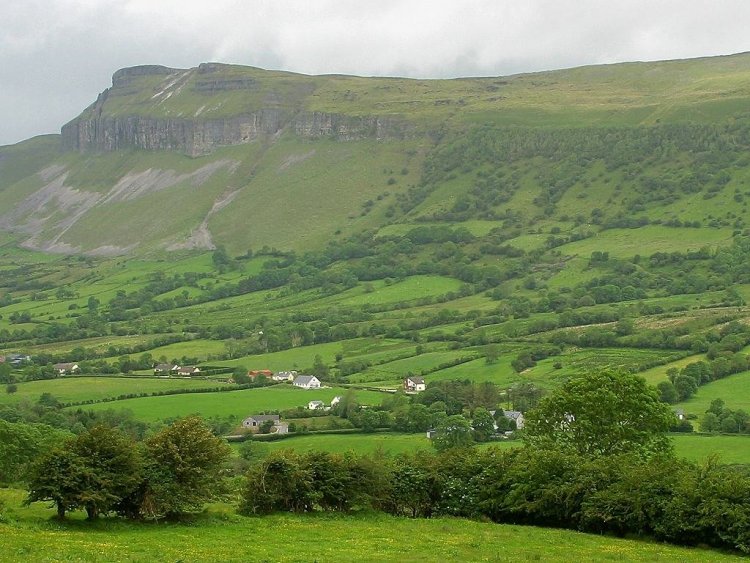
Trade unions at Bord na Móna (Ireland's state-owned national peat company) have deferred plans for strike action after a meeting with the management this morning. All workers will now be balloted this Thursday on new proposals from the company.

A picket was placed on some of Bord na Móna's production sites early this morning, but the industrial action has now been lifted until the ballot is held on Thursday in Tullamore, Co. Offaly.

The workers at the Bord na Móna peat bogs in counties Offaly, Westmeath and Longford had already voted in favour of strike action three weeks ago.

The dispute concerns some proposed changes to the payment system for the company's staff who are mainly harvesting the peat that is burned in three ESB power stations in the Midlands.
Without regular supply from the nearby bogs, the Edenderry, Shannonbridge and Lanesborough power stations would run into difficulties and might have to shut down if the strike action lasts for a longer period of time.

03 December 2008

Revenue Commissioners recover € 24 Million

The latest list of Irish tax defaulters shows that 111 individuals and companies have made settlements with the Revenue Commissioners and paid them more than € 24 million in back taxes and penalties.

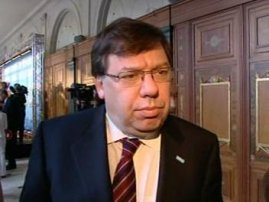
One building company, Condron Concrete from Tullamore, Co. Offaly (home county of Taoiseach Brian Cowen), has paid the Revenue Commissioners over € 8.1 million in owed tax, interest and penalties.

This is the largest recorded settlement since the Revenue Commissioners began to publish the names of tax defaulters.

However, it is only a drop in the ocean compared with a tax deficit of € 8 billion for 2008 (see yesterday's entry below) and the vast sums squandered by the senior management of FÁS out of their annual budget of € 1 billion.

As much as it is right for the Revenue Commissioners to go after tax dodgers in the private sector, it is a telling sign of double standards that wasters of large sums of taxpayers' money in the public sector are getting away with it. And if they are forced to resign - like Rody Molloy - they go home with their pockets full of good-bye money and will enjoy a princely pension for the rest of their lives.

This two-tier system with one law for the government and its minions, and another for the rest of us, needs to be abolished. One would hope that the Revenue Commissioners would support such an overdue move.

The Emerald Islander

29 November 2008

Farmers protest against Fianna Fáil in Co. Offaly

While more than 8000 teachers and parents protested in Donegal town today against cuts to the education budget (see my earlier entry below), the Irish Cattle and Sheep Farmers Association (ICSA) demonstrated outside the Tullamore Court Hotel in Tullamore, Co. Offaly, where Fianna Fáil were holding their National Councillors' Forum Annual Conference.

Around 200 Fianna Fáil county and city councillors from around the country gathered for this meeting and had to pass the gauntlet of the angry farmers, who displayed banners, placards and a small flock of miniature plastic models of cows and sheep in front of the conference hotel.

ICSA's angry protest was directed against recent cuts in the agricultural budget, and especially against a reduction of support schemes for small farms, which affects mostly people farming in the west and north-west of Ireland, where they raise cattle and sheep.

The Taoiseach, the Tánaiste and three other government ministers were addressing the Fianna Fáil meeting, and it has been reported that especially Brian Cowen gave "a rousing speech" to his party members.
This is probably quite necessary, as the current unpopularity of the Irish government worries many Fianna Fáil councillors, particularly in light of the up-coming local elections next year.

The Tánaiste and Minister for Enterprise, Trade & Employment Mary Coughlan, Transport Minister Noel Dempsey, Education Minister Batt O'Keeffe and Agriculture Minister Brendan Smith also addressed the meeting and then faced the councillors in a questions-and-answers session, especially over the details of the controversial 2009 Budget.

However, in their usual arrogant way neither the Taoiseach nor his ministers had any time for the protesting farmers and showed no concern for their problems. I am sure the farmers - and not only those who were present today in Tullamore - will remember this when they cast their votes in future.

The Emerald Islander

13 October 2008

Arson Attacks on Garda Stations

A Garda station in southern Connemara was extensively damaged in a suspected arson attack. The fire at Carna Garda station (photo left) in Co. Galway broke out at around 10 p.m. last night.
About two weeks ago windows of the same station had been smashed during the night, but no further damage was done at that time. There were also some other acts of vandalism reported in the area in recent weeks.

Only five days ago the Garda station of Blarney (photo right) in Co. Cork was also badly damaged by another fire.

Gardaí
are now attempting to establish a motive for both attacks, but it is not suspected that they are connected.

Arson attacks on Garda stations are fortunately not occurring frequently in Ireland, but there has been a considerable number of such crimes in recent years.

Last year, on March 22nd, 2007, an arson attack was made on the Garda station at Bandon, in the west of Co. Cork. A man walked into the public office of the station at 11 p.m. with a petrol bomb. The spreading fire was quickly extinguished by Gardaí, but there was smoke damage to the floor and walls. A person who had been in the foyer during the attack was treated in hospital as a precaution.

Three years ago the Garda station in Littleton, Co. Tipperary was target of not one but two arson attcks within the short span of 13 weeks. The first took place on July 25th, 2005 and - just as the station had been repaired and refurbished again - a second occurred on November 2nd, 2005.

Six weeks before the first attack at Littleton, in the morning of June 14th, 2005, five petrol bombs were thrown at Blackrock Garda station in Cork city. Two Gardaí, who were in the station at the time, managed to extinguish the fires. There were no injuries and - apart fom burn marks on the outer walls (photo above) - no damage was done to the building.

On
May 3rd, 2004 the Garda station at Carrigbyrne in Co. Wexford was extensively damaged by another serious act of arson.

In the night to Saturday, May 31st, 2003 a 19-year-old woman started at fire at Tallaght Garda station on the outskirts of Dublin.

On February 28th, 2002 a 28-year-old alcoholic from Finglas walked into Ballymun Garda station in Dublin, claiming his brother was missing. He then poured petrol, which he had with him, on the floor of the station's public area and set it alight. The Garda in charge on the night reacted quickly and put the fire out himself, so only € 1000 damage was done in this attack. The man was arrested and on June 19th, 2003 sentenced to three years imprisonment.

The most serious arson attack on Gardaí took place on Wednesday, July 21st, 1999 at Tallaght Garda station. A man entered the station at around a quarter to five in the morning, carrying petrol and some flares. He went into the public office, where the Sergeant and several other Gardaí were on duty, and set it on fire. Then he escaped in a white Ford Sierra car. Extensive damage was done to the station and tragically Sergeant Andrew Callanan, a 36-year-old married man and father of three small children, died from severe burns later in hospital. Several other Gardaí were injured in this outrageous attack.

On April 19th, 1999 another Garda station, this time in Edenderry, Co. Offaly, was set alight in the early hours of the morning. The Sergeant's office was completely gutted and some damage was done to the public office. A Garda patrol car, which was parked at the rear of the station, was burnt-out in the blaze (photo above right), while a second car, owned by a civilian, was also partially damaged.

One wonders why Garda stations around the country are not better protected against such attacks. But then again, many of the stations that suffered arson attacks are in rural areas and not manned around the clock. There is only a Garda present for several hours a day, but never at night. And some smaller rural stations are entirely unattended by now. All they provide for the public is an intercom connection to the next manned station, which is often many miles away.

As a historian I can only reflect on the lessons one can learn about this from history. Whenever the State withdraws its visible presence - which is usually the police - from a local community, it leads to two things: Alienation of people from the State and reduction of their respect for government and authorities; and an increase in crime, vandalism and unsavoury behaviour.

Maybe it is time for the Minister for Justice Dermot Ahern (photo above left) and Garda Commissioner Fachtna Murphy (photo right) to have a closer look at their general strategic policing principles and in particular at the deployment pattern of the Garda Síochána around the country.

The Emerald Islander