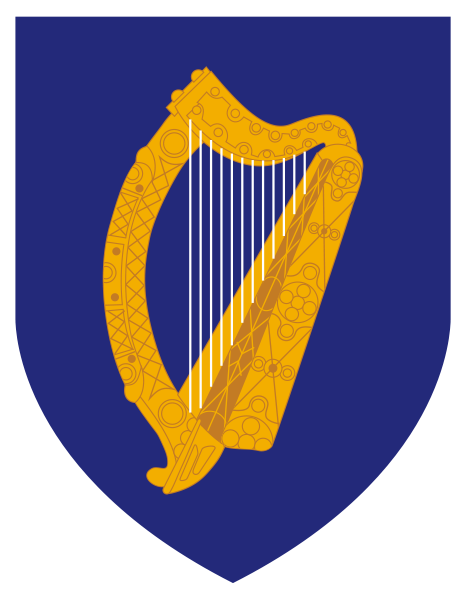
More and more people here in Ireland - myself included - are wondering what the Oireachtas (our parliament) is really doing all year long. Especially Dáil Éireann - the House of Deputies (above right) - has an appalling work record, sitting on average not more than twenty percent of a year's time. Nevertheless the TDs are not only paid full-time salaries, but in fact earn a lot more than most people in this country who work full-time, and often many hours more than our professional politicians.
To make the bad situation even worse, the Dáil finished its business earlier than usual this afternoon and then closed for an extra three-week holiday over St. Patrick's Day and Easter! This is beyond a bad joke, and a slap in the face of every working person in Ireland. The Dáil had only returned to work on January 30th, after an overly lengthy six-week winter break, and now our TDs are on holidays again until 2.30 p.m. on Wednesday, April 2nd.
To no one's surprise the government, which instigated the extra break for the Dáil, has already been accused of laziness by closing parliament for St. Patrick's Day and Easter.
Opposition parties accepted the need for some ministers to attend events in foreign countries around St. Patrick's Day, as it has become tradition, but suggested some were taking advantage of the situation.
Fine Gael's Richard Bruton said the government had failed to produce new legislation, and was now "taking the first opportunity to skive off".
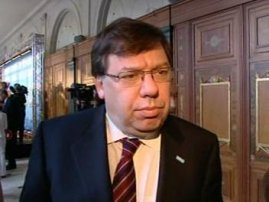
 Eamon Gilmore (left), the leader of the Labour Party, accepted the importance of cabinet ministers attending St. Patrick's Day functions around the world, calling it "a valuable marketing opportunity". But he said that figures on the costs of such trips - revealed yesterday by RTÉ's "Morning Ireland" programme - suggested that some ministers "have been tearing the rear end out of it, and that needs to be looked at".
He added if the government was thinking of beginning the summer recess at the start of July and not returning until the end of September, his party "will make a hell of a fuss".
Apart from that, the promotional trips of certain cabinet ministers do not justify closing down the Dáil for weeks. The parliament is after all the nation's Legislature and should still be able to function when a significant number of the Executive is missing.
If anyone else would be that selfish and lazy, they would long be sacked from their jobs. But the ignorance and complacency of the Irish electorate has prevented that. Most members of the Dáil were re-elected in the general election last May, despite their unsatisfactory performance in previous years. So, I suppose now Ireland is just getting what it deserves.
 As the famous Savoyard writer, diplomat and political philosopher Joseph-Marie Comte de Maistre (pictured right) put it so well already in the 18th century: “Every country has the government it deserves.”
Today's new example of extreme parliamentary inefficiency raises once more the question if Dáil Éireann is too large and if the TDs are paid too much for the little part-time work they do. (See also my entry from January 31st)
In my opinion a Dáil reform is overdue, especially since now about two thirds of all legislation comes from Europe and all the Dáil needs to do is to implement it into Irish domestic law.
There are currently 166 TDs and 60 Senators. This is a large number of professional politicians for a small country like Ireland. The USA, for example, with about 75 times the Irish population, has a mere 400 members in the House of Representatives and only 100 Senators. And New Zealand, a country with similar economic structure and the same population as Ireland, has no upper house at all and a total of currently 121 members of parliament. (A referendum to reduce the number of MPs to 99 was passed, but has not yet been implemented.)
I applaud Eamon Gilmore's statement and hope he will indeed make "a hell of a fuss" when it comes to the length of parliamentary summer holidays later this year. But his words would have even more weight if the Labour Party - perhaps in co-operation with other opposition parties - would come up with a feasible model for the long overdue Dáil reform.
The Emerald Islander