Showing posts with label employers. Show all posts

15 July 2009

ECA accepts Pay Rise for Electricians

The Irish Electrical Contractors' Association (ECA) has decided to accept the Labour Court's recommendation in the dispute between electricians and their employers.

The court recommended a 4.9% phased increase in pay, which would be phased in by means of a 2.5% increase in September, with the remaining 2.4% introduced on January 1st, 2010.

The Association of Electrical Contractors of Ireland (AECI), which represents around 200 smaller electrical contractors, is due to meet in Portlaoise, Co. Laois on Saturday to consider its response to the recommendation.

Around 10,000 electricians returned to work on Monday after a week-long nation-wide strike that disrupted work at hundreds of construction sites in Ireland. (see also my entries of July 6th & July 13th)

13 July 2009

Irish Electricians return to Work

Thousands of Irish electricians have returned to their work this morning after the Labour Court recommended that they should receive a 4.9% pay rise.

The Technical, Engineering & Electrical Union (TEEU), which represents most of the electricians, suspended its week-long strike after holding an executive meeting at their head office in Dublin yesterday.

Last Monday morning at 5.30am the strike began with TEEU pickets (photo left) being placed at hundreds of construction sites all across the country. (see my entry of July 6th)
The industrial action, which was the first major strike in Ireland in years, disrupted the work on many buildings, including landmark projects such as Terminal 2 at Dublin Airport and the new national Football and Rugby stadium on Dublin's Lansdowne Road. And - to the delight of the local Shell to Sea protest group - there were TEEU pickets also at the controversial Shell gas refinery at Bellanaboy in northern Co. Mayo.

There was strong support for the strike from almost all Irish electricians, and also a predominantly positive reaction to it from the media and the general population. Only the leaders of employers' organisations, such as former PD party president and junior minister Tom Parlon (photo right), who became the Director General of the Construction Industry Federation (CIF) only weeks after he lost his seat in the Dáil (and with it his ministerial job) in the 2007 general election, were strongly opposed to the electricians' strike. Tom Parlon used the most offensive language of all the industry leaders, calling the TEEU "a bunch of lunatics" in an interview with Pat Kenny on RTÉ Radio 1.

Now that the Labour Court has spoken, the dispute should be settled. But the employers, whose attempt to con the electricians out of an agreed deal and impose a 10% pay cut on top of it, have not yet responded to the Labour Court recommendation. It will be their decision if normality is to return to the industry, or if there will be more industrial action.

The TEEU has warned that it will consider reintroducing the strike if employers do not accept the pay rise. And in my opinion they are quite right to keep this option open. We have seen what the likes of Tom Parlon have done to the country, and now they want to do even more damage by reducing workers' pay, while they themselves go home with large salaries each month. There is already a deep divide between rich and poor in Ireland, and if we let the employers make this rift even wider, all we will get in return is more unemployment and considerable social unrest.

The Emerald Islander

07 May 2009

New ESRI Study reveals Discrimination against People with non-Irish Names

A recent study has found clear evidence of discrimination by Irish employers against people with non-Irish names.

The Economic and Social Research Institute (ESRI) in Dublin conducted this new research into the treatment of Irish and non-Irish job applicants.

As part of the study the researchers sent out 500 CVs in response to job advertisements.
Pairs of CVs with matching details but different names were sent in response to 250 jobs ads.
The two fictitious applicants for each job had identical qualifications, skills and experience. But those with common Irish surnames were more than twice as likely to be called for an interview than people with foreign sounding names.

According to the ESRI's team of researchers, the level of discrimination revealed in Ireland is high, compared to other countries.

Richard Fallon from the Equality Authority said that the findings point to "a needless loss of opportunity" if employers do not look at the skills behind names on job applications.

What the ESRI found out by sending fictitious job applications to Irish employers is no news to me. As my father was from Belgium, I have a surname that looks 'foreign' to most Irish people. And I have experienced discrimination by Irish individuals and institutions over many years.

Employers are only one element of the spectrum. Government offices, TDs, local authorities and their various sub-offices as well as individuals have treated me less favourable than friends and neighbours with typical Irish surnames. And it is still going on.
Almost every day the question I am asked most often by Irish people, after I introduce myself, is: "Where do you come from?"
No-one called Brennan, Hayes, Murphy, O'Neill or Ryan - to mention but five of the typical Irish names - will ever be asked such a question.

But this is only the tip of the proverbial iceberg. In the past I was refused benefits to which I was entitled like anyone else, my name disappeared mysteriously from lists on which it had been put in my presence, and it happens ever so often that some weird people simply abuse me verbally for being 'foreign', without any particular reason.

Among my friends and acquaintances are several individuals with 'foreign' names, and they had and have similar experiences as I do. An interesting example are two couples I know rather well. In both cases one of the partners is Irish and the other foreign, and they live in the same area of the same Irish town.
The Irish wife of my Austrian friend does experience more discrimination than the German wife of an Irish friend. So - just as the ESRI found out in their study - surnames do play a role in this.
I wonder if this only goes for obviously non-Irish surnames, or also for foreign names that came into Ireland in the past with various waves of migration, such as the Normans or the Huguenots.

But there is another element in regard to job applications that annoys me immensely. Every week thousands of people in Ireland answer job ads and send applications to companies, public offices and organisations. And only very few of them ever receive a reply. This, in my opinion, is rude, arrogant and uncivilised.

In several other EU countries there are rules (and even laws) that entitle any job applicant to a reply, and if it is only a three-line letter saying that the application is not successful. Thus people know where they stand and are treated fair and humanely.
In Ireland there are no rules, so most people never hear anything from potential employers they wrote to. They never know if their letters were actually received and read, and if so, why their job applications did not succeed. This should no longer be tolerated.
And if it needs a new law - in case employers' organisations are unwilling to introduce the matter as a common rule to their members - then we should have it.

The Emerald Islander

17 September 2008

Agreement reached in National Pay Talks

This morning - after months of general talks and weeks of intensive negotiations - the Social Partners have eventually reached a new National Wage Agreement for the Republic of Ireland.

The last session with representatives of employers and all Irish trade unions went on for 22 hours and all through the night. Negotiators on both sides realised that they were already into the third day over the deadline set by the Taoiseach, and that might have helped their minds to sharpen and reach an agreement.

The result of the long and tedious talks is a pay increase of 6% for all workers, to be paid over 21 months.
The pay rise will be applied in two phases, with a 0.5% increase at the end of the agreement for workers earning less than € 430.49 per week, or around € 22,463 per annum.

All private sector workers will have a three-month pay pause. They will then receive a 3.5% increase over six months and a further 2.5% for the following year.

Public sector workers will have an 11-month pay pause from the last module of the Towards 2016 programme.
They will then receive 3.5% for the next nine months (commencing September 1st, 2009) and a further 2.5% for the remainder of the agreement.
The agreement also contains commitments on public service modernisation to reflect the latest OECD report.

Brian Cowen explained that the new agreement would include provisions to prevent employers using temporary agency workers to break strikes.
There will also be a statutory prohibition on victimisation of trade union members, and on inducements to encourage trade union members to leave their unions.

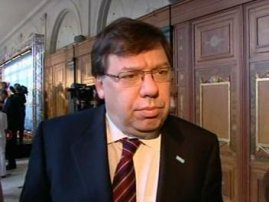
"The new National Pay Agreement will give a sense of confidence and stability in the challenging period ahead," the Taoiseach said earlier in Dublin.
"Even though the negotiations were very lengthy and complex, the Social Partners made commendable efforts to enable the terms of a draft Agreement to be identified."

Trade union leaders and the representatives of the employers' organisations are now putting the new draft agreement before their members for approval. There will be internal discussions and a detailed examination of the agreed terms, and a result is expected in about two weeks.

"This has been a long and arduous process, played out against a background of rapidly changing economic reality for workers and the economy as a whole," said Jimmy Kelly, Regional Secretary of Ireland's second-largest trade union UNITE, after the talks had ended and rows of exhausted negotiators emerged from Government Buildings in Dublin.
Turlough O'Sullivan, Director General of the employers' lobbying group IBEC, said there were "many positives in the deal".

The Emerald Islander