Showing posts with label Liverpool. Show all posts

23 May 2009

Jacob's end Production in Ireland

Jacob's, Ireland's famous manufacturers of biscuits, crackers and wafers (and one of the oldest and best-known brand names on this island), have baked the last biscuits at their factory in Tallaght, County Dublin yesterday afternoon.

As Tallaght was the company's last manufacturing facility in the Republic of Ireland, this means the end of production of our favourite biscuits in our own country.

The closure of the plant, which had started production in the 1970s, had been already announced in September 2008, and a gradual wind-down process of production took place since then. However, the closure means that another 220 jobs are lost in Dublin, and in the harsh recession we are in, that hurts.
Jacob's sales, marketing and administration departments, which together still employ about 100 people, will remain in Tallaght, at least for the time being.

The 15 popular brand lines of the company (most of which are market leaders) will from now on be manufactured in several plants in Britain and on the European continent, where - according the company's chairman Michael Carey - "the production is more efficient and less costly".

In modern business language this is called 'outsourcing'.

The Jacob's plant at Belgard Road in Tallaght had been working with only 16% of its full capacity for years, and in times of recession this is a situation few companies would or could maintain.

Even though Jacob's have been in Dublin for more than a century, the company was not founded in the capital. Like so many good and important things in Ireland, Jacob's biscuits came originally from the Emerald Isle's oldest city - Waterford.

In 1881 two brothers - William and Richard Jacob - opened a small biscuit bakery here in Bridge Street, close to the river Suir (and leading onto the city's only bridge).

They did very well, and soon their products became popular all over Ireland.
As the business began to grow and expand,
W & R Jacob moved to larger premises on Dublin's Bishop Street (left), a site now occupied by the National Archive of Ireland. The brothers also had another Dublin factory in Peter's Row and later opened an English branch in Liverpool as well.

In 1916 the Bishop Street factory was one of several prominent Dublin buildings occupied by members of the Irish Citizens Army during the Easter Rising.

In the 1920s the company's two branches separated, with the Dublin branch retaining the W & R Jacob name, while the Liverpool branch was renamed Jacob's Bakery Ltd.
In the 1970s W & R Jacob merged with Boland's Biscuits to form Irish Biscuits Ltd. and moved to Tallaght, into the then new manufacturing plant that has produced its last biscuits yesterday.

Since 1990, when the company was bought by the French food giant Groupe Danone, Jacob's is strictly speaking no longer an Irish company. After several changes, the English branch is now part of the multi-national United Biscuits, while the Dublin branch was acquired a few years ago by the Fruitfield Food Group, which then changed its name to Jacob Fruitfield Food Group.

Jacob's biscuits are very popular here, and an almost essential part of every Irish childhood and growing-up process. And even as an adult I still like them very much. In fact, while I am writing this, I have two of Jacob's famous fig rolls sitting beside my mug of tea.

I presume that we will see Jacob's products on the shelves of our shops and supermarkets in the future, as we have seen them for all our lives. But I wonder if we will from now on have the same sentimental feelings that we always had when buying them.
Although we knew perfectly well that they were made in Dublin and Tallaght, for us they were somehow still 'our own' Waterford biscuits from Bridge Street.
Now they are not even made in Ireland any longer, and it is sad to see a great manufacturing tradition end after 128 years.

The Emerald Islander

13 January 2008

Cities of Culture

This weekend the English port city of Liverpool held a series of spectacular celebrations to mark the official begin of its status as the European Capital of Culture for 2008. Predictably a lot of attention was paid to these show events by the British media, and equally predictably they featured prominently the two surviving members of the Beatles, Paul McCartney and Ringo Starr.

Ever since their spectacular success as Britain's best-known and most influential music group in modern times, the Beatles - and everything even remotely connected with them - have been used and exploited by Liverpool's cultural bureaucrats to promote their grubby city and make it look more exciting and interesting than it actually is.

When I heard a few years ago that Liverpool had been chosen as European Capital of Culture for 2008, I was frankly quite surprised. It had been known that under the rotation system of the EU Britain was due for this annual honour in 2008, and then had to select the most suitable city from a number of candidates. In my opinion there are many more suitable cities, richer in culture, in the UK than Liverpool, which is better known for crime and deprivation. And - even though this goes a long time back - one should never forget that Liverpool was one of the main profiteers of the slave trade. Not an element I would regard as culture.

But, as with so many things in Britain, one should not expect too much, and certainly never the best and most logical solution. It just never happens in the UK.
By now it is of course too late and Liverpool will bathe itself in the glory and host a massive string of events, in total about 350 throughout the year. And I wish them good luck with them.
However, the question for me is what amount of culture and long-term input will remain in Liverpool when the year is over? On this line I am skeptic, knowing Liverpool and what is going on there below the great cultural canvas that covers the city for the moment.

Three years ago Ireland was due to provide the European Capital of Culture and the powers to be had chosen Cork, our second-largest city (after our capital Dublin had been chosen already in 1988, the year of the city's millennium celebrations).
As it happens, I was involved in the preparatory work for the events in Cork during 2002 and 2003, but not during the actual celebratory year 2005 itself (as I had another and even larger commitment for that year). There was a lot of planning done in advance, and Cork even used the opportunity to modernise its complete sewage system, although that did not directly fall into the category of culture. Much was done well, and the opening ceremony was quite breathtaking and impressive, especially for a small country like Ireland.
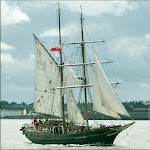
However, during the year 2005 itself the impact the status of European Capital of Culture had on Cork was a lot less than the city council had hoped for. Maybe the fact that the much smaller city of Waterford - 123 km east of Cork - hosted in the same year the start of the International Tall Ships' Race (and attracted more than 450,000 visitors in only four days) did not help Cork. But the main reason for the relatively limited interest was that there is just not enough natural and regular culture there, while many other attractions in the country were operating as normal and having many visitors, too.

The whole concept of the European Capital of Culture, as much as it was originally a good idea, is by now a bit dated and tends to get stale like old bread. After all the obvious choices for the honour have been selected already in previous years and hosted very successful and effective events, the award of the title is dropping down the list of available cities, reaching the second and third rate choices. Eventually the title will either have to be awarded to the major cities for a second time, or it will lose its value and should better be abolished altogether.

Strangely enough, quite the opposite is the case. Now the title of European Capital of Cultures is actually awarded not to one city per year, but to two: one in a member state of the EU, and the other outside the EU. This - frankly - makes no sense at all and devalues the status of the chosen cities even further.
Besides Liverpool the second European Capital of Culture for 2008 is the Norwegian port city of Stavanger. Outside Norway hardly anyone has taken notice of that, and the media in the English-speaking world only mention Liverpool. This is highly unfair to Stavanger, especially as the city has made a great effort and some of her 150 planned events are more original and more interesting than many of the shows lined up in Liverpool. But inflation means devaluation, and with simply too many specifically organised cultural events in one year everyone will in the end be disappointed. Like in every other way and walk of life, less could mean more in European culture.

The Emerald Islander